
Continuous Tray Oven vs Spray Dryer for Silicon-Carbon Anode Slurry
Silicon-carbon anode slurry can enter a drying line with more than 90% water, but high water content alone does not decide the equipment. A continuous tray oven and a spray dryer remove water in very different ways and create different process conditions.
For the project described here, the selected route is a nitrogen-protected continuous tray oven. That does not mean a tray oven is automatically right for every silicon-carbon slurry. The choice begins with the required product form and the full battery-material process.
The essential difference
| Question | Continuous tray oven | Spray dryer |
|---|---|---|
| How is material carried? | On trays or trolley-mounted trays through defined zones | Atomized as droplets into a drying chamber |
| Process path | Multi-zone residence path with controlled transfer | Very short droplet-drying path |
| Best selection basis | Need for tray-based handling, controlled residence and integrated nitrogen process | Need for atomization and a powder-forming spray-drying route |
| Key process inputs | Tray depth, slurry behavior, residence time, temperature profile, atmosphere | Atomization behavior, droplet formation, feed stability, chamber and recovery design |
The comparison is about process fit, not about declaring one technology better than the other.
When a continuous tray oven fits
A nitrogen-protected continuous tray oven is selected when the line needs:
- a defined tray-based thermal path for the slurry;
- automated trolley transfer through multiple zones;
- separate early water-removal and final-drying stages;
- required nitrogen protection integrated with circulation, exhaust and controls; and
- recorded temperature and humidity data for the operating cycle.
This is the route used in the silicon-carbon anode slurry drying solution.
When to assess spray drying instead
A centrifugal spray dryer should be assessed when the process requires a feed to be atomized into droplets and dried as part of a powder-forming route. The slurry must be suitable for pumping and atomization, and the resulting particle form must suit the downstream battery-material process.
The decision should consider:
- slurry viscosity and stability;
- atomization suitability;
- desired final particle form and downstream handling;
- atmosphere and exhaust requirements;
- recovery and dust-management design; and
- the quality criteria used to release the dried material.
For a general guide to choosing between drying technologies, see spray dryer vs flash dryer. Silicon-carbon anode slurry requires its own process review; it should not be selected by analogy to a chemical or food application.
A practical selection checklist
- Define the final product form. Does the process require a tray-dried intermediate, or is an atomized powder-forming route required?
- Confirm feed behavior. Measure solids, rheology, stability and any sensitivity that matters to loading or atomization.
- Confirm the atmosphere requirement. In this project nitrogen protection is mandatory, so gas conditions must be designed with the dryer.
- Set the quality checks. Confirm target moisture, test method and any material-quality criteria that drive the process.
- Run trials and engineering review. Final technology selection should follow the real material and validated requirements.
---
Technology selection for battery materials should be based on confirmed material data and validated product requirements, not on moisture content alone.
Frequently Asked Questions
Related Products
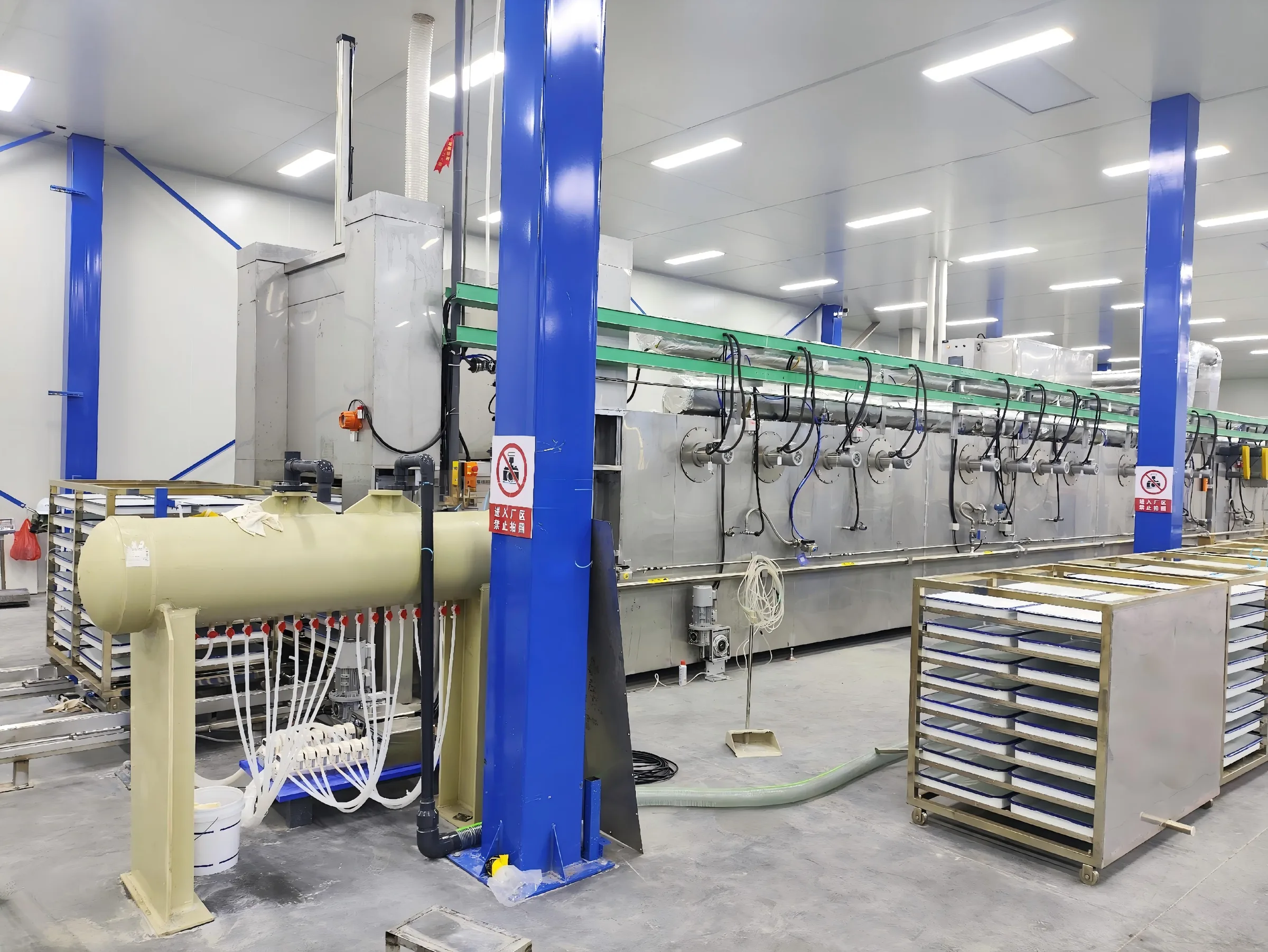
Nitrogen-Protected Continuous Tray Oven for Lithium-Ion Battery Materials
Nitrogen-protected continuous tray oven for drying high-moisture silicon-carbon anode slurry. Multi-zone steam and electric heating, automated trolley transfer and PLC process records.
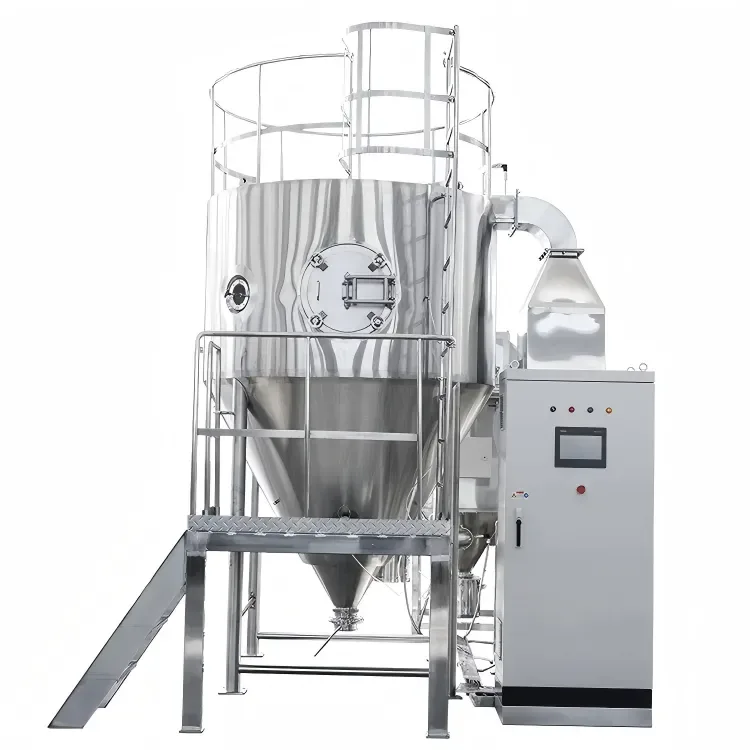
High-Speed Centrifugal Spray Dryer
Centrifugal spray dryer turning solutions, suspensions, emulsions and pastes into powder in one pass. Models from 5 to 2,000 kg/h water evaporation.