Why Two-Stage Drying Matters for Silicon-Carbon Anode Slurry
Silicon-carbon anode slurry in this project starts with more than 90% water. Applying one undifferentiated oven temperature across that entire moisture range does not give the process team much control. A two-stage drying profile separates early free-water removal from final drying, while the material moves through a nitrogen-protected continuous tray line.
Stage 1: establish controlled free-water removal
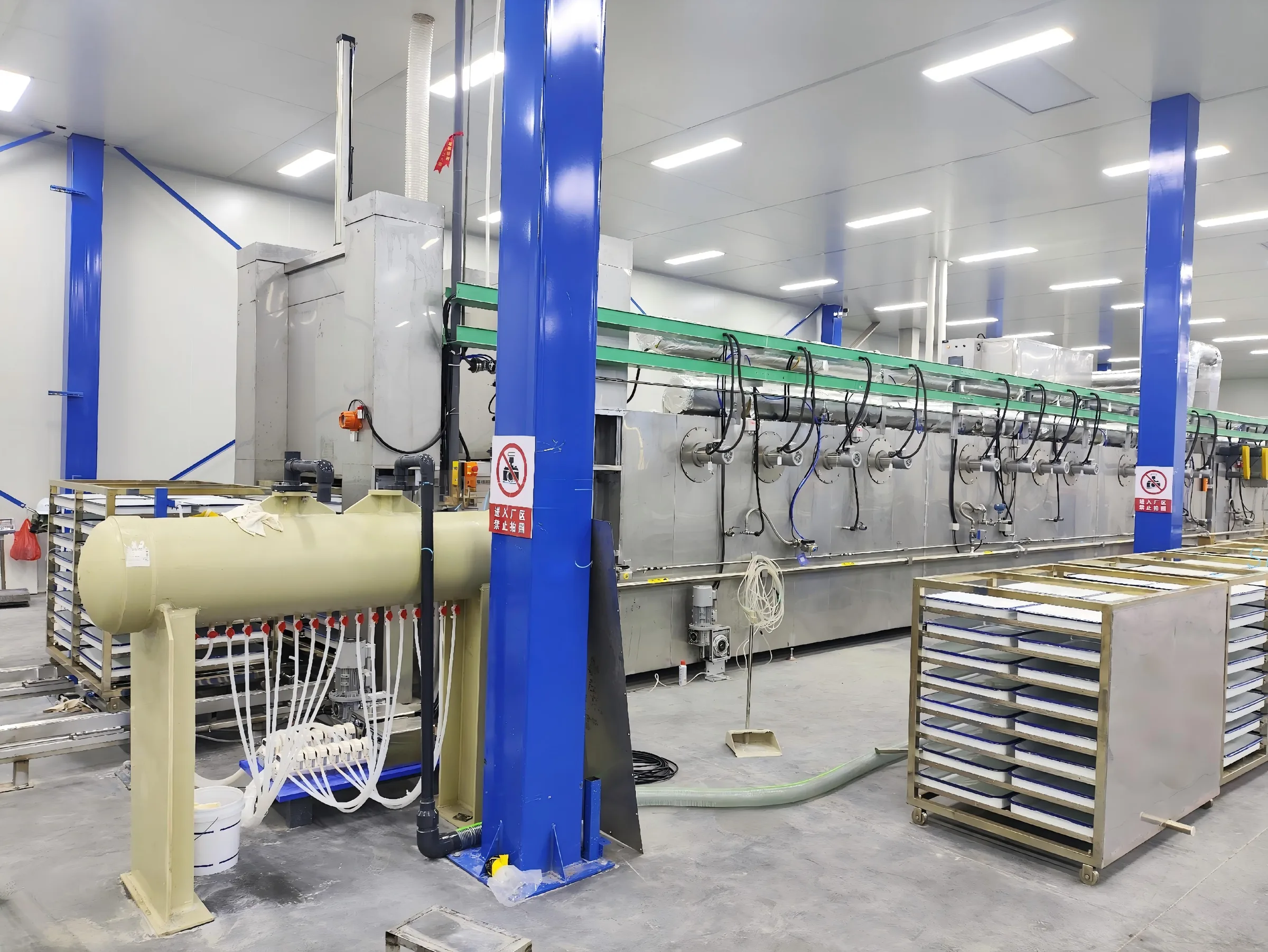
At the inlet, the slurry contains the highest water load. The early section of the reference line uses steam heating to create a controlled first drying stage. The aim is to manage free-water removal in a stable way before the material moves to the later zones.
The exact early-zone temperature is not a universal number. It is set against the slurry formulation, tray loading depth, target residence time and validated operating window.
Stage 2: complete final drying with independent control
After the early water-removal stage, the material reaches the later zones. In the reference LXHX-22 configuration, these use electric heating and independent temperature control. This gives the operator and process engineer a more adjustable final-drying section.
| Stage | Main purpose | Reference heat source |
|---|---|---|
| Early zones | Controlled free-water removal | Steam |
| Later zones | Final moisture reduction | Electric heating |
| Entire line | Required atmosphere and moisture management | Nitrogen, circulation and exhaust system |
This structure is the foundation of the silicon-carbon anode slurry drying solution.
Why independent zones matter
Each drying unit in the reference design has its own temperature control. This makes it possible to work with a process profile instead of a single setpoint. It also gives the team a practical way to refine the line during commissioning, based on measured moisture and the agreed quality checks.
The benefits are process-control benefits, not automatic guarantees of material performance. Final results have to be confirmed by the material owner through the required product and process validation.
Heating must work with nitrogen and moisture removal
The temperature profile cannot be designed in isolation. The line also needs to manage nitrogen supply, circulating gas, humidity, exhaust and any required dehumidification. In a high-moisture battery slurry process, these functions work together.
That is why the equipment should be specified as a nitrogen-protected continuous tray oven, rather than as a conventional oven with a simple temperature requirement.
What to confirm during process design
- wet-basis feed rate and initial water content;
- target final moisture and measurement method;
- tray loading depth and slurry rheology;
- steam and electrical utilities available on site;
- nitrogen purity, oxygen limit and gas-handling requirement; and
- required production schedule and operating records.
---
The two-stage concept is process guidance. Confirm all operating conditions through material testing and the final lithium-ion battery-material process specification.