
Spray Drying Milk Powder: Process & Parameters
Milk powder is the classic spray-drying product. Liquid milk is concentrated and then spray-dried into a free-flowing powder that reconstitutes cleanly, all while protecting the protein and flavour that make dairy valuable.
The drying challenge
- Heat-sensitive — milk protein denatures and flavour is lost if drying is too hot or too long.
- High solubility required — the powder must reconstitute without lumps.
- Liquid feed that has to become a dry, free-flowing powder in one pass.
Why spray drying fits
- Fast, gentle drying. Seconds-long drying keeps protein denaturation low (under 5%) and solubility high (≥98%), preserving flavour and nutrition.
- Worked example. Concentrated milk (solids 45–50%) is atomized (e.g. a pressure nozzle at about 10 MPa, or a centrifugal disc) into 50–100μm droplets, contacted with 180°C inlet air, dried in about 3 seconds and held to an 85°C outlet — giving powder at ≤2.5% moisture and >99% solubility.
- Clean exhaust. A cyclone plus bag filter keeps dust emission low (under about 10 mg/m³).
- Centrifugal atomizer suits the high throughput of continuous dairy lines.
Figures are industry-typical for spray drying; verify against your own material before relying on them as guarantees.
Talk to us
Tell us your feed, solids content and target powder and we'll recommend the right spray dryer. Browse the spray dryer range or see how spray drying works.
Frequently Asked Questions
Related Products
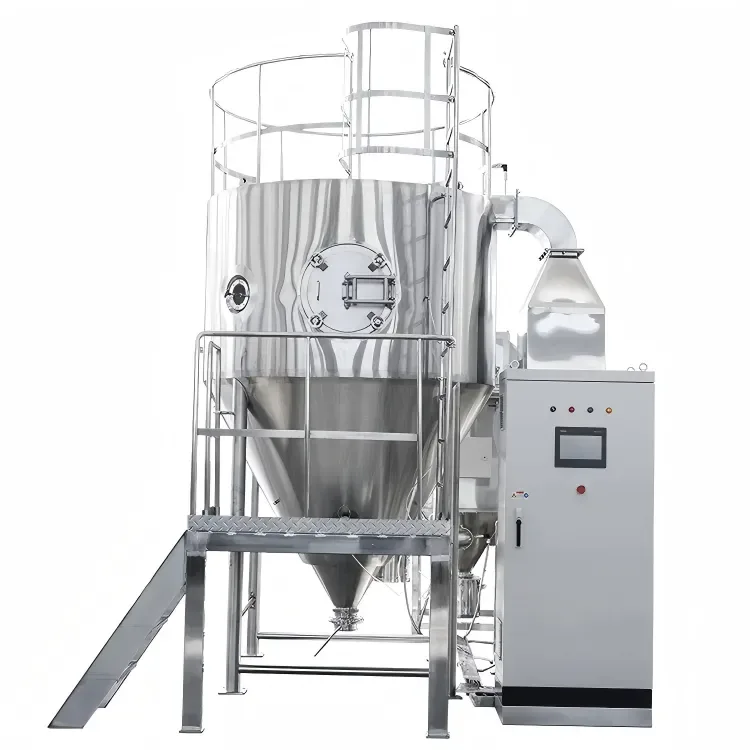
High-Speed Centrifugal Spray Dryer
Centrifugal spray dryer turning solutions, suspensions, emulsions and pastes into powder in one pass. Models from 5 to 2,000 kg/h water evaporation.
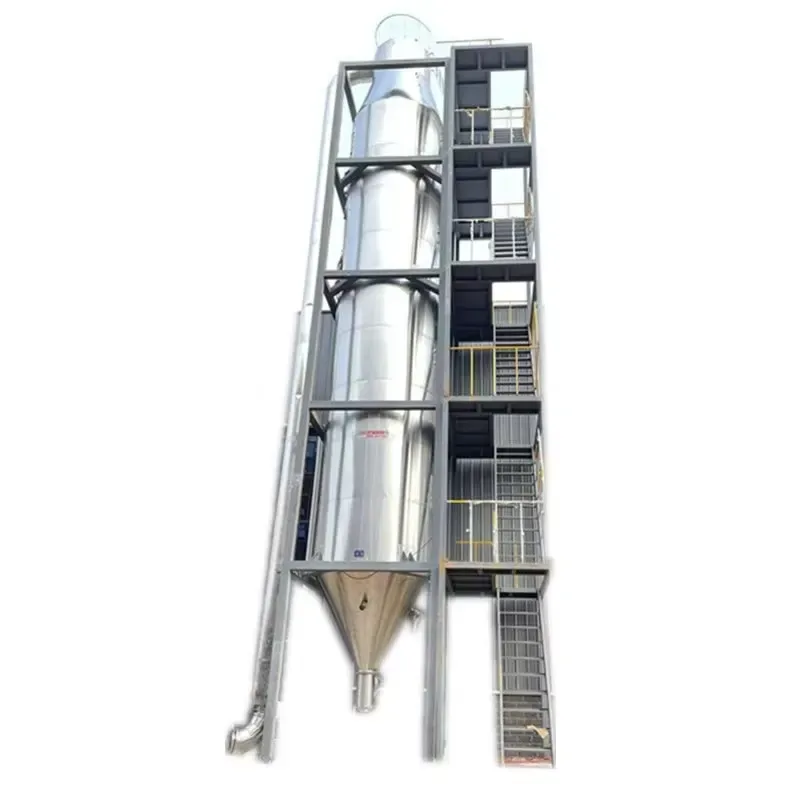
Pressure Spray Dryer
Pressure-nozzle spray dryer that dries and granulates in one step, producing uniform spherical granules with good flow and solubility.