
How Spray Drying Works: Atomization, Drying & Separation
A spray dryer turns a liquid — a solution, emulsion or pumpable slurry — directly into a dry powder in a single, continuous pass. It does this by spraying the liquid into a fine mist and meeting that mist with hot air, so each tiny droplet dries in seconds. Because the drying is so fast and the droplet never gets much hotter than the evaporating water, spray drying is the standard way to powder heat-sensitive materials such as milk, coffee, enzymes, probiotics and pharmaceuticals. The whole process happens in three stages.
Stage 1 — Atomization
The feed is pumped to an atomizer at the top of the drying chamber, which breaks it into droplets typically 10–200μm across. Turning the liquid into a mist multiplies its surface area enormously, which is what makes the drying so fast. There are three main atomizer types, and the choice sets the particle size and suits different feeds:
- Centrifugal (rotary) atomizer — a disc spinning at high speed (up to roughly 25,000–30,000 rpm) flings the liquid off its edge. It handles a large throughput with an even particle size and copes well with low-viscosity feeds, which is why it is common for milk powder, coffee and dyes.
- Pressure (nozzle) atomizer — a high-pressure pump (about 2–20 MPa) forces the liquid through a nozzle orifice (roughly 0.1–2 mm) to form a cone of droplets. It gives a uniform particle size and suits higher-viscosity slurries, though the nozzle wears.
- Two-fluid (airflow) atomizer — compressed air at high velocity (≥300 m/s) shears the liquid into droplets. The nozzle is simple and resists clogging, which suits viscous pastes and small-scale or laboratory work, at the cost of higher energy use.
Stage 2 — Drying (heat and mass transfer)
The droplets meet hot air — inlet temperature usually 150–350°C, set by how heat-sensitive the material is — flowing co-current, counter-current or mixed. Drying then happens in two phases:
- Constant-rate phase: moisture evaporates freely from the droplet surface, which stays near the wet-bulb temperature (about 60–90°C) while a dry shell forms and internal moisture migrates outward.
- Falling-rate phase: once the surface dries, internal moisture moves more slowly and the particle warms toward the air temperature. The outlet temperature is held around 80–120°C to finish drying without deactivating heat-sensitive components.
The droplets are fully dry within about 5–30 seconds. The outlet temperature is the main control on final moisture — raising it by roughly 10°C lowers powder moisture by about 1–2%.
Stage 3 — Powder separation
The dried powder leaves the chamber entrained in the exhaust air and has to be recovered:
- Cyclone separator — uses centrifugal force to drop most of the powder out, at about 85–95% recovery, though the finest particles (<5μm) can escape with the air.
- Bag filter — catches the fine dust at over 99% efficiency and is cleaned by pulse or reverse air.
- Wet scrubber — used instead where the material is toxic or flammable, washing the powder out of the gas.
The numbers that matter
Spray drying is prized for the powder it makes: a narrow, controllable particle size (10–200μm), a porous structure that gives a high surface area (up to 50–500 m²/g) and good solubility, and high purity (≥99%) from closed operation. Its main trade-off is thermal efficiency of about 30–50%, which is why heat recovery and a well-designed hot-air system matter on large lines.
Figures here are industry-typical for spray drying; verify them against your own material and equipment before relying on them as guarantees.
Next steps
See the differences between machine configurations in spray dryer types, where spray drying is used in spray dryer applications, or browse the spray dryer range.
Frequently Asked Questions
Related Products
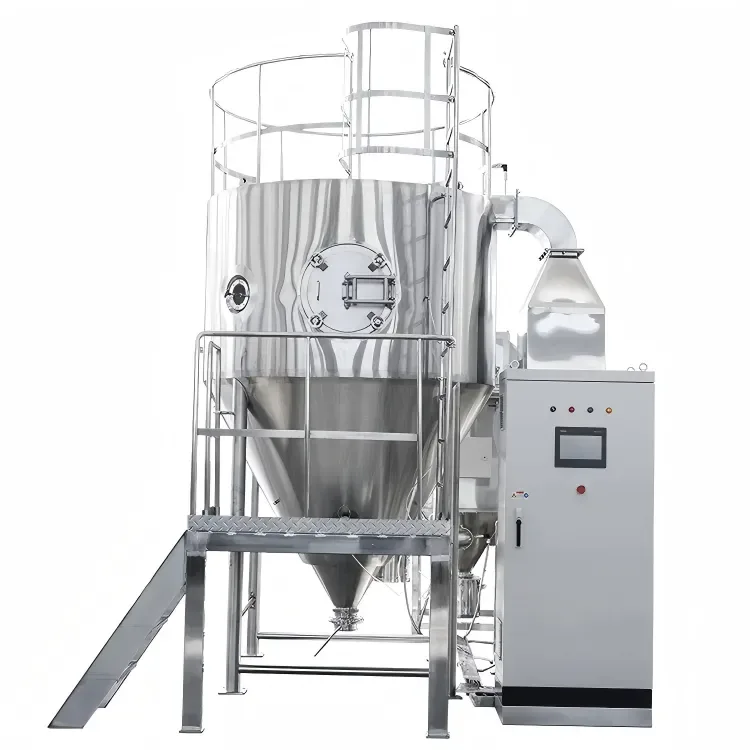
High-Speed Centrifugal Spray Dryer
Centrifugal spray dryer turning solutions, suspensions, emulsions and pastes into powder in one pass. Models from 5 to 2,000 kg/h water evaporation.
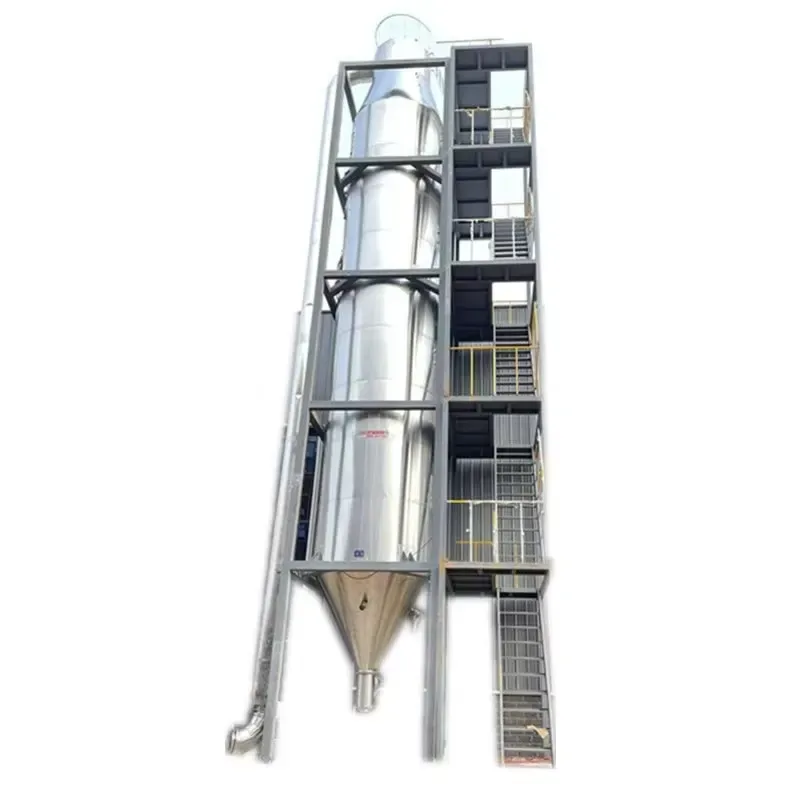
Pressure Spray Dryer
Pressure-nozzle spray dryer that dries and granulates in one step, producing uniform spherical granules with good flow and solubility.
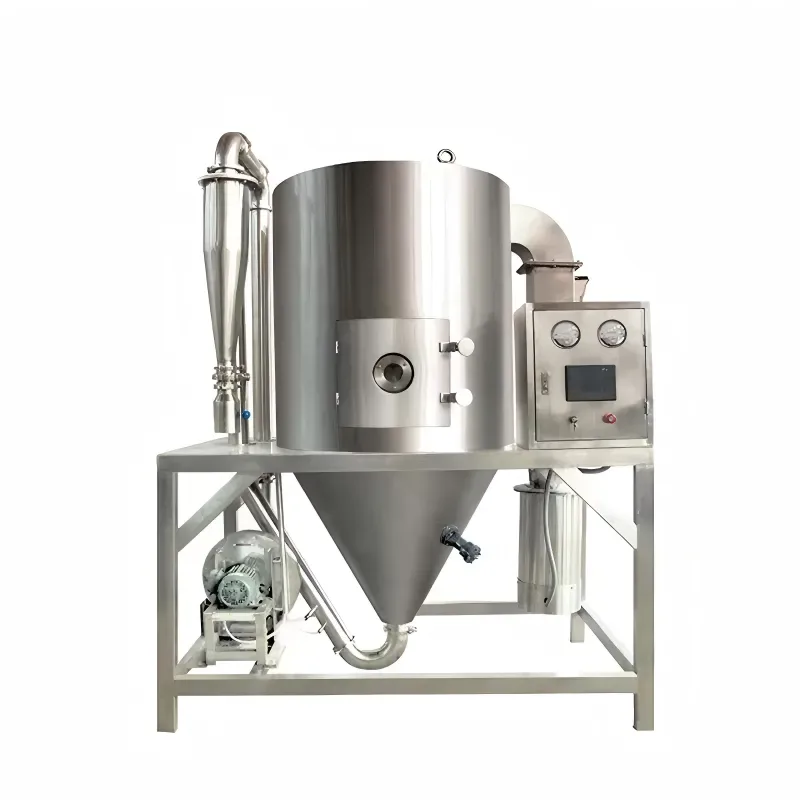
Herbal Extract Spray Dryer
Spray dryer purpose-built for low-melting, high-sugar herbal extracts, preventing wall-sticking, charring and moisture absorption.