How to Control Moisture Uniformity in High-Moisture Battery Slurry Drying
For silicon-carbon anode slurry with more than 90% water, reaching a target final moisture is only part of the job. The line also needs a repeatable moisture result across trays, trolley positions and production runs. Moisture uniformity is a system outcome: it comes from the slurry, loading method, thermal path, gas handling and operating records working together.
Start with consistent tray loading
The tray is the first control point. If loading depth or slurry distribution changes from tray to tray, the drying path changes before the material reaches the oven.
Confirm and control:
- tray loading depth;
- slurry distribution across the tray;
- wet-basis mass per tray;
- slurry rheology and solids condition; and
- loading and transfer consistency.
The upstream loading arrangement is part of the drying solution, even if it is supplied separately from the oven.
Use a zone profile, not one oven setpoint
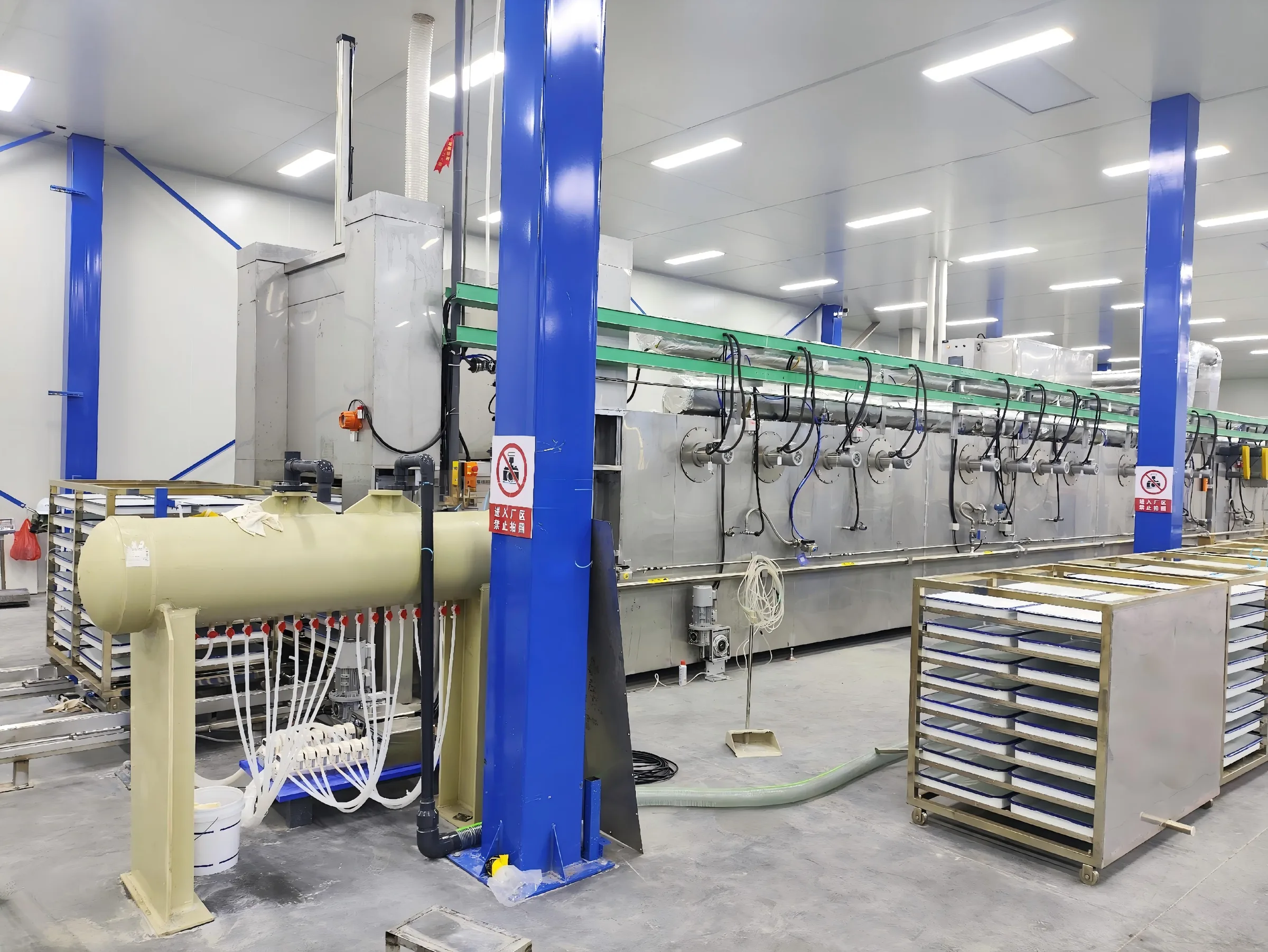
A nitrogen-protected continuous tray oven gives the process a defined route through multiple zones. Early zones manage free-water removal; later zones complete final drying. Independent temperature control by unit gives the team a practical way to adjust the profile against the actual material result.
See why two-stage drying matters for the process logic behind this staged approach.
Keep gas movement and moisture removal stable
Temperature alone does not determine moisture uniformity. The system must also manage the drying atmosphere:
| Control area | What to review |
|---|---|
| Circulation | Fan condition, gas distribution and consistency by zone |
| Exhaust | Exhaust-fan operation and the moisture-removal path |
| Nitrogen | Required gas supply, distribution, monitoring and interlocks |
| Humidity | Sensor readings, trends and any required dehumidification |
| Doors and transfer | Automatic-door sequence and trolley movement through the line |
For this silicon-carbon anode process, nitrogen protection is mandatory. The gas condition must be designed with the oven, rather than treated as an isolated utility.
Use data to troubleshoot variation
The reference system can display, store and export temperature and humidity values. Those records are useful when a production team compares a good run with a run that shows moisture variation.
Use the records with sampling data to investigate:
- whether the feed condition changed;
- whether tray loading was consistent;
- whether zone setpoints and actual values matched;
- whether fan, exhaust or humidity conditions changed; and
- whether trolley movement or residence time was affected.
Do not assume that a final-moisture issue is solved by raising every zone temperature. A structured review is more likely to protect the required process window.
Build the acceptance plan before commissioning
Agree the moisture test method, sampling locations, sampling frequency and acceptance criteria before production trials. Then use the resulting data to tune the silicon-carbon anode slurry drying solution around the customer's material and process requirement.
---
Moisture-uniformity targets and sampling methods must be agreed for the specific silicon-carbon anode material and validated during commissioning.