Steam vs Electric Heating for Lithium-Ion Battery Material Drying
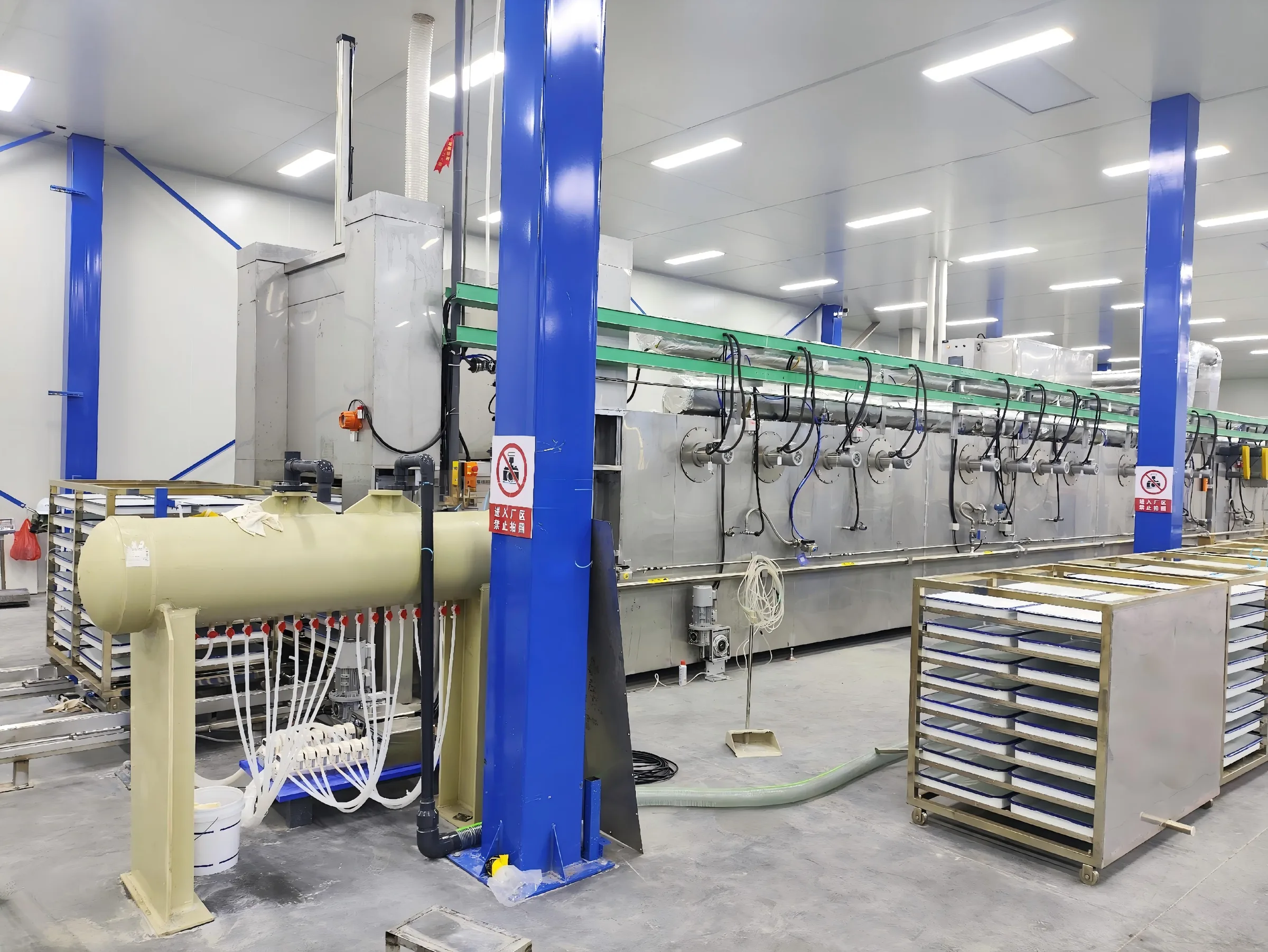
The heat source in a lithium-ion battery material drying line should follow the drying path. In the reference silicon-carbon anode slurry project, early zones use steam heating and later zones use electric heating. This is a hybrid process design, not a claim that one heat source suits every zone or every material.
Why the reference line uses hybrid heating
The slurry enters with more than 90% water. The early process must handle the first water-removal stage, while later zones complete final drying under a separately controlled profile.
| Heating route | Role in the reference line | Selection consideration |
|---|---|---|
| Steam heating | Early drying zones | Available steam utility and controlled initial evaporation |
| Electric heating | Later drying zones | Independent control for the final-drying profile |
| Nitrogen system | Entire drying path | Required atmosphere, circulation, exhaust and interlocks |
The line is configured as a nitrogen-protected continuous tray oven, so heat-source selection must also work with the required gas and moisture-management design.
Steam: useful where the site utility and process fit
Steam heating can be a strong option when the site has reliable steam available and the early drying duty benefits from that utility. In the LXHX-22 reference configuration, the early units use steam heat exchangers.
The engineering review should confirm steam pressure, available flow, heat-exchanger design, control response and how the early-zone profile interacts with tray loading and moisture removal.
Electric heating: useful for independently controlled later zones
Later zones in the reference line use electric heating. Independent electrical zones can give the process team practical adjustment of the later thermal profile during commissioning and production.
Electrical design must include the required installed power, distribution, protection, control logic, wiring and maintenance access. It should not be treated only as a number on a nameplate.
Compare the complete operating picture
Do not choose steam or electric heating based only on purchase price. Compare:
- steam availability, pressure and operating cost;
- electrical capacity and demand profile;
- water evaporation duty and target throughput;
- required zone control and response;
- insulation and heat-loss management;
- nitrogen-protected atmosphere and exhaust requirements; and
- maintenance and site operating practice.
For the complete drying path, see why two-stage drying matters for silicon-carbon anode slurry and the silicon-carbon anode slurry drying solution.
---
Select the heat source from confirmed utility data and material trials. The reference steam/electric split is not a universal process specification.