
How to Choose a Flash Dryer: A Practical Selection Guide
A flash dryer is only the right choice when it is matched to your material, your throughput and your compliance requirements. Get any of those wrong and you pay for it in caking, lost product activity or a machine that can't hit your moisture target. Use the four checks below before you commit.
1. Match the machine to your material
The feed characteristics decide the configuration:
- High-viscosity pastes and filter cakes need a model with a strong disintegration/agitation structure so the material is sheared apart instead of caking on the wall.
- Heat-sensitive materials (foods, pharmaceuticals, fine chemicals) need low-temperature hot-air circulation and a short residence time — typically 1–3 seconds — so active ingredients are not deactivated.
- Corrosive materials need corrosion-resistant linings on the contact parts to protect both the machine and the product.
2. Size by capacity and process requirements
Size the dryer against your water-evaporation rate, not just throughput, then confirm the particle-size requirement:
- Pilot or lab work → a small benchtop model; volume production → an industrial high-capacity model.
- If you have a tight particle-size spec, specify the top classifier so outlet particle-size distribution is controlled.
A quick reference using our XSG line — read across to the model whose water-evaporation rate covers your duty:
| If you need to evaporate… | Look at | Chamber Ø |
|---|---|---|
| up to ~75 kg/h water | XSG-4 | 400 mm |
| ~130–300 kg/h | XSG-6 / XSG-8 | 600–800 mm |
| ~345–645 kg/h | XSG-10 / XSG-12 | 1,000–1,200 mm |
| ~730–1,200 kg/h | XSG-14 / XSG-16 | 1,400–1,600 mm |
Full figures are on the Spin Flash Dryer page.
3. Confirm materials of construction and compliance
- Food and pharmaceutical duties: 304 or 316 stainless steel on all contact parts to meet GMP cleanliness. Use 316/316L where chlorides or aggressive media are present; 304 is fine for milder, non-corrosive products.
- Corrosive products: specify an anti-corrosion lining so the equipment is not attacked and the product is not contaminated.
- For oxidation-sensitive or solvent-laden materials, ask about nitrogen-protected (closed-loop) operation.
4. Vet the supplier's track record
- Favour a supplier with real drying cases for materials like yours — the same machine behaves very differently on calcium carbonate versus a herbal extract.
- Confirm documented thermal efficiency and operating stability, not just headline numbers.
- Avoid the classic trap of choosing on price alone and ignoring fit; an under-spec dryer that can't hold your moisture target is the more expensive option.
Quick decision checklist
- [ ] Feed type identified (paste / cake / slurry / free-flowing) and disintegration matched
- [ ] Heat sensitivity known → low-temp circulation + short residence time if needed
- [ ] Water-evaporation rate calculated → model sized against it
- [ ] Particle-size spec → classifier specified if tight
- [ ] Contact-part material chosen (304 vs 316/316L) for compliance and corrosion
- [ ] Supplier has comparable material cases and documented performance
New to the technology? Start with how a flash dryer works, or browse the full flash dryer range.
Frequently Asked Questions
Related Products
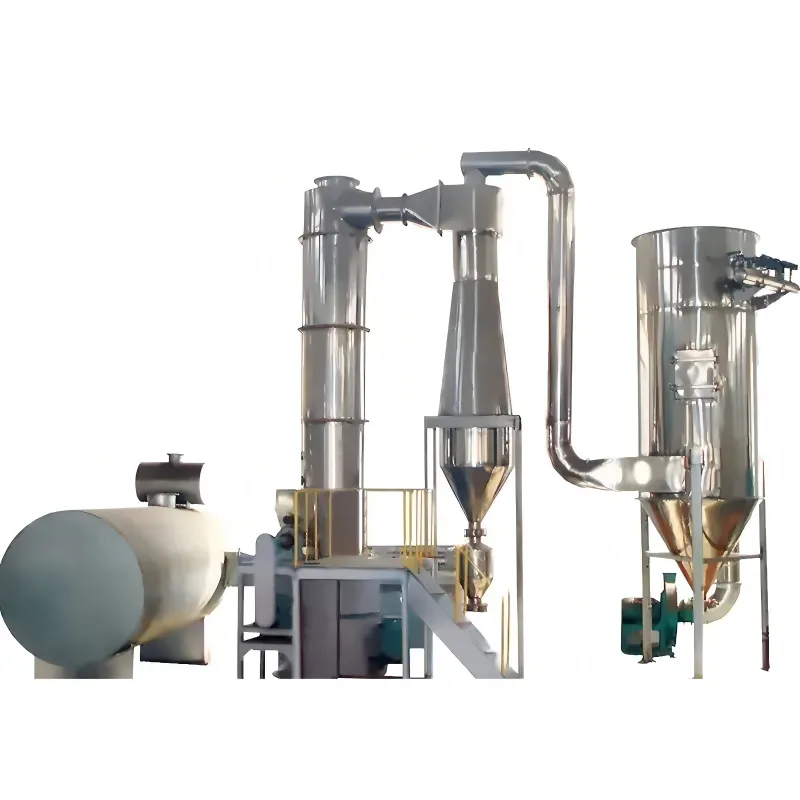
Spin Flash Dryer
XSG spin flash dryer for filter cakes, pastes and slurries. Dries, disintegrates and classifies in one chamber. Seven models evaporating 58–1,203 kg/h of water.
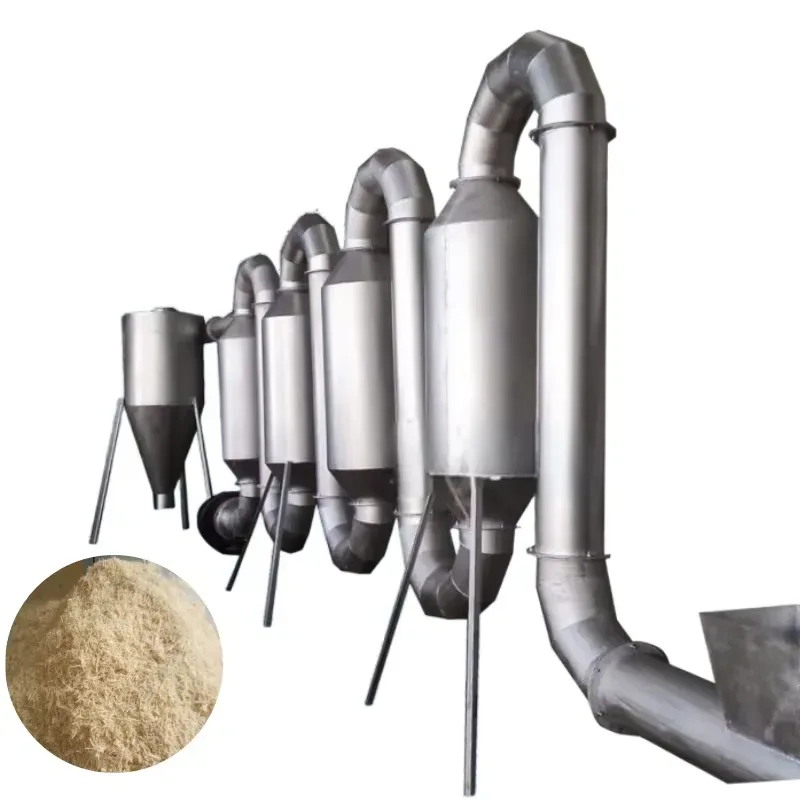
Pulse Flash Dryer
Pulse flash dryer using instantaneous airborne drying to remove free moisture from powders and granules at high throughput.