
Spray Dryer Applications: Food, Pharma, Chemical & More
Spray drying is used wherever a liquid has to become a free-flowing powder quickly and gently. Food is the largest sector at over 40% of applications, followed by pharmaceuticals (~25%) and chemicals (~20%), with growing use in environmental and new-energy materials.
Food (over 40% of applications)
- Dairy — whole and skim milk powder, whey protein, cheese powder; spray drying keeps solubility high (≥98%) and protein denaturation low (<5%), preserving flavour and nutrition.
- Instant drinks — coffee, tea, juice and soy-milk powders; a low outlet temperature (80–90°C) protects aroma and gives fast-dissolving powder.
- Functional food — probiotic, dietary-fibre and collagen-peptide powders; active retention is high (≥90%) with a uniform particle size (D50 50–100μm) ready for tableting or encapsulation.
Pharmaceuticals (~25%)
- Drug materials — antibiotics, vitamins, amino acids and herbal extracts; short, seconds-long drying limits the loss of heat-sensitive components.
- Microencapsulation — coating actives such as probiotics, enzymes and fish oil for controlled or masked release.
- Sterile and biologic — sterile powders and vaccine/enzyme/protein drugs; closed and vacuum operation (≤0.1 MPa) limits oxidation and contamination, with activity retention ≥95%.
- Herbal (TCM) extracts — drying water or alcohol extracts to instant granules, raising purity by 15–20% with active loss under 5%.
Chemicals (~20%)
- Dyes and pigments — iron oxide red, titanium dioxide, phthalocyanine blue, reactive and disperse dyes; a uniform particle size (D50 10–50μm, colour difference ΔE ≤1.5) gives strong tinting strength.
- Catalysts — molecular sieves, alumina, nickel-based catalysts; spray drying builds a porous structure with a high surface area (300–500 m²/g, porosity ≥60%).
- Inorganic salts and oxides — calcium carbonate, sodium sulfate, alumina, white carbon black; avoids the caking of tray drying for a free-flowing powder.
- Polymers — polyurethane microspheres, acrylic and epoxy resins, with controlled particle shape.
Environmental (~10%)
- Sludge — electroplating, printing-dyeing, paper and municipal sludge dried below 10% moisture, cutting volume by 70–80%.
- Waste liquid — recovering solids from paper black liquor, pharmaceutical and electroplating effluents at ≥95% recovery; lignin can be recovered as sodium lignosulfonate.
- Flue-gas desulfurization — drying gypsum slurry into building gypsum.
New-energy materials
- Lithium battery cathodes — LFP and NCM/NCA precursors and lithium cobaltate, controlling particle shape and agglomerate size for cycle life and rate performance.
- Fuel cell and hydrogen — catalyst carriers (carbon nanotubes, graphene) and metal-hydride hydrogen-storage powders.
Other
Ceramics and new materials (narrow distribution, lower sintering temperature), feed additives (vitamin and enzyme premixes), and pesticide and fertilizer formulations (wettable powders, water-dispersible granules).
Performance figures are industry-typical; verify against your own material before relying on them.
See the selection guidance by type, or browse the spray dryer range.
Frequently Asked Questions
Related Products
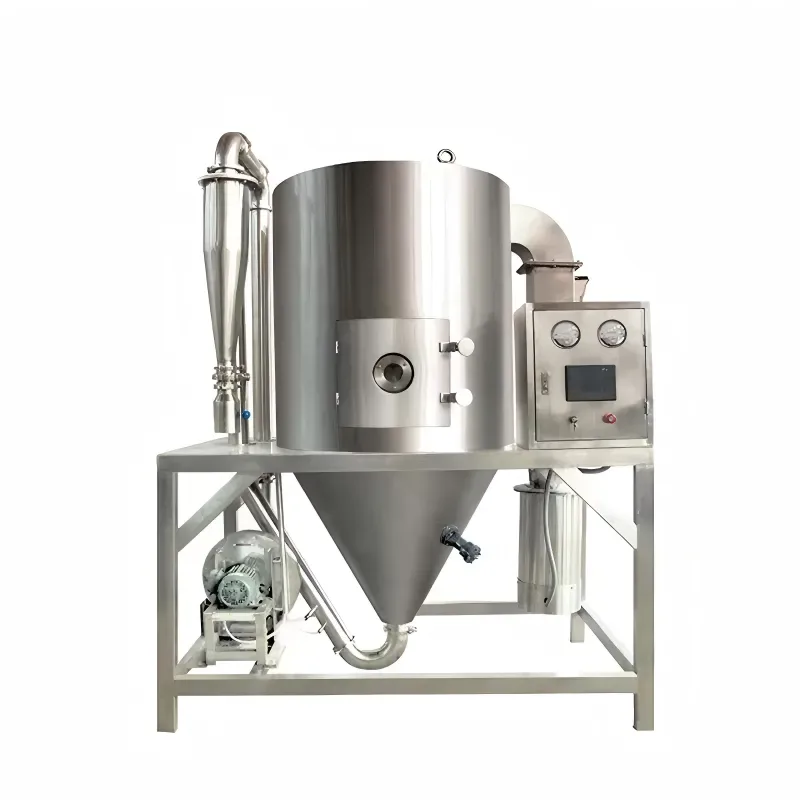
Herbal Extract Spray Dryer
Spray dryer purpose-built for low-melting, high-sugar herbal extracts, preventing wall-sticking, charring and moisture absorption.
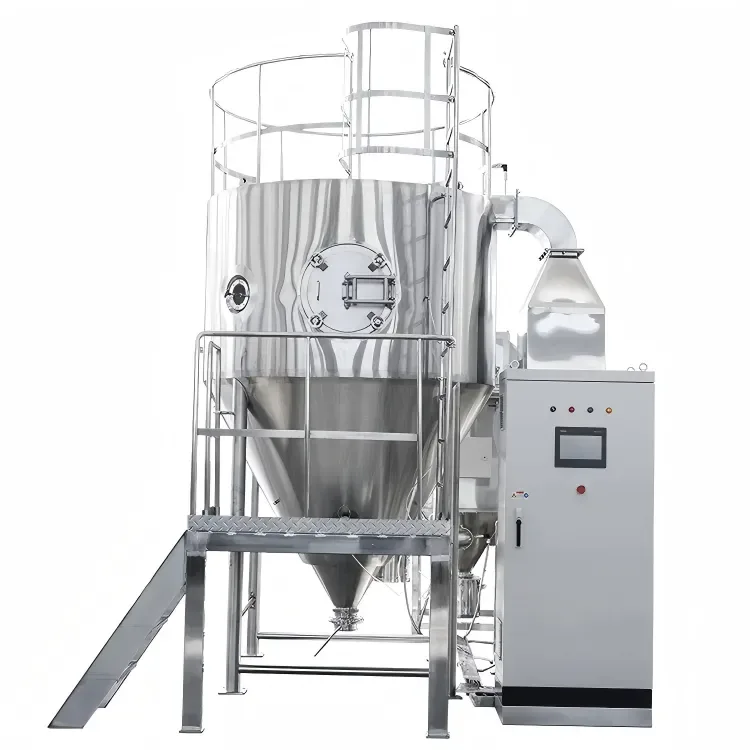
High-Speed Centrifugal Spray Dryer
Centrifugal spray dryer turning solutions, suspensions, emulsions and pastes into powder in one pass. Models from 5 to 2,000 kg/h water evaporation.
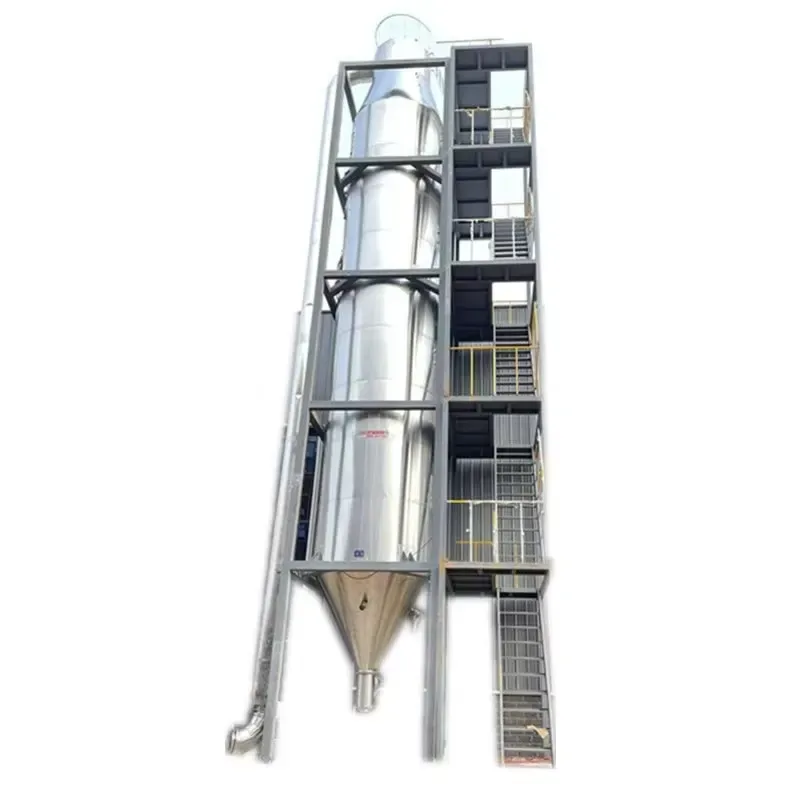
Pressure Spray Dryer
Pressure-nozzle spray dryer that dries and granulates in one step, producing uniform spherical granules with good flow and solubility.