
Flash Dryer Applications: 7 Industries and Real Use Cases
Spin flash dryers are used wherever a wet cake, paste or slurry has to become a dry, free-flowing powder quickly — and especially where the material is heat-sensitive, viscous or high in moisture. Because residence time is only a few seconds, the flash dryer reaches markets that conventional dryers struggle with. Here are the seven industries where it earns its place, with the kinds of materials and outcomes you can expect.
At a glance
| Industry | Typical materials | What the flash dryer delivers |
|---|---|---|
| Chemicals | Calcium carbonate, iron oxide, kaolin, bentonite; catalysts, dye intermediates, resins | Low final moisture, preserved chemical activity, closed operation for toxic media |
| Pharmaceuticals | Herbal extracts, antibiotics, vitamins, berberine, hormones | GMP-grade purity, preserved actives, oxidation protection |
| Food | Whey, soy protein, collagen, probiotics; starch, flavors | Good solubility, no clumping, no scorching |
| Minerals & metallurgy | Kaolin, talc, mica; alumina, zinc oxide, iron oxide | High throughput, low energy, better dispersion |
| Pigments & dyes | Titanium dioxide, iron oxide red; phthalocyanine blue/green | Uniform particle size, bright color, high purity |
| Environmental | Municipal, dyeing and electroplating sludge; biomass residues | Big volume reduction, no secondary pollution |
| New-energy & nano | LFP cathode, graphene; nano ZnO, nano silica | Narrow particle-size distribution, no agglomeration |
1. Chemicals
Inorganic — calcium carbonate, iron oxide red, kaolin, bentonite, zinc sulfate, vanadium pentoxide and white carbon black. Adjusting the classifier ring controls particle size, and calcium carbonate can be dried to a final moisture as low as ~0.1% for plastic and rubber fillers — without the high temperatures that would decompose it, so its chemical activity is preserved.
Organic — catalysts, dye intermediates (H-acid, DSD-acid), pesticide raw materials and resins. Dye intermediates are dried under slight negative pressure to prevent toxic-gas leakage and meet environmental limits, and the short drying time reduces the risk of heat-sensitive materials degrading.
2. Pharmaceuticals
Herbal (TCM) extracts — concentrates and extracts such as baicalin and chlorogenic acid. Using low-temperature hot air (≤80°C) and a short residence time (1–3 s) preserves the active ingredients and avoids the charring and loss that traditional drying causes.
Western APIs — antibiotics, vitamins, berberine and hormones. Vitamin C, for example, is dried under a nitrogen-protection system to prevent oxidation, meeting GMP requirements for purity and stability.
3. Food
Functional foods — whey powder, soy protein, collagen and probiotic powders. Precise hot-air control (≤60°C for whey) preserves protein nutritional value and gives a product with good solubility and no clumping.
Seasonings and additives — starch, flavors and gelatinized starch. The classifier controls particle size for good flowability, and the short, gentle drying avoids the scorching that hurts product quality.
4. Minerals & Metallurgy
Non-metallic minerals — kaolin, bentonite, talc and mica. Dried kaolin shows improved whiteness for paper and ceramics, and the dryer's large throughput and low energy use suit large-scale production.
Metal oxides — alumina, zinc oxide and iron oxide. A waste-heat-recovery setup on zinc oxide drying can cut energy cost by around 30%, while fast drying avoids agglomeration and improves dispersion.
5. Pigments & Dyes
Inorganic pigments — titanium dioxide, iron oxide red and chrome oxide green. A pulse bag filter keeps dust emission below 10 mg/m³, and uniform particle size gives a bright, consistent color.
Organic dyes — phthalocyanine blue and green and disperse dyes. Nitrogen protection prevents oxidation during drying, holding purity above 99% while the short cycle avoids color shift.
6. Environmental & Waste Treatment
Sludge reduction — municipal and industrial sludge (dyeing, electroplating). Dyeing sludge can go from ~80% moisture to below 10%, cutting volume by about 70% for easier incineration or landfill, with no secondary pollution.
Biomass utilization — mycelium, bio-sludge, distiller's grains and drug residue. Antibiotic drug residue, once dried, can serve as a feed additive or biomass fuel, retaining nutrients and raising resource recovery.
7. New-Energy & Nanomaterials
New-energy materials — lithium-iron-phosphate (LFP) cathode material, graphene and carbon nanotubes. Precise control of hot-air temperature and gas velocity avoids particle agglomeration, giving a narrow particle-size distribution and good electrochemical performance.
Nanomaterials — nano zinc oxide and nano silica. Low-temperature hot air and a short residence time stop particles from growing, keeping the nanoscale size and product value.
Matching the dryer to the application
A few rules of thumb that apply across all seven sectors:
- Heat-sensitive materials → low-temperature model with nitrogen protection.
- High-viscosity materials → a model with a strong agitator to avoid wall caking.
- Strict emissions → high-efficiency dust collection (pulse bag filter) to meet limits.
- Large-scale production → a high air-volume, high water-evaporation model — in our line, around XSG-8 to XSG-10 and above.
- Small-batch / frequent changeover → a smaller, easily-adjusted model.
For the full method, see our flash dryer selection guide; for the engineering behind it, see how a flash dryer works. When you're ready to size one, the Spin Flash Dryer page lists the XSG-4 to XSG-16 range, or browse all flash dryers.
Related Products
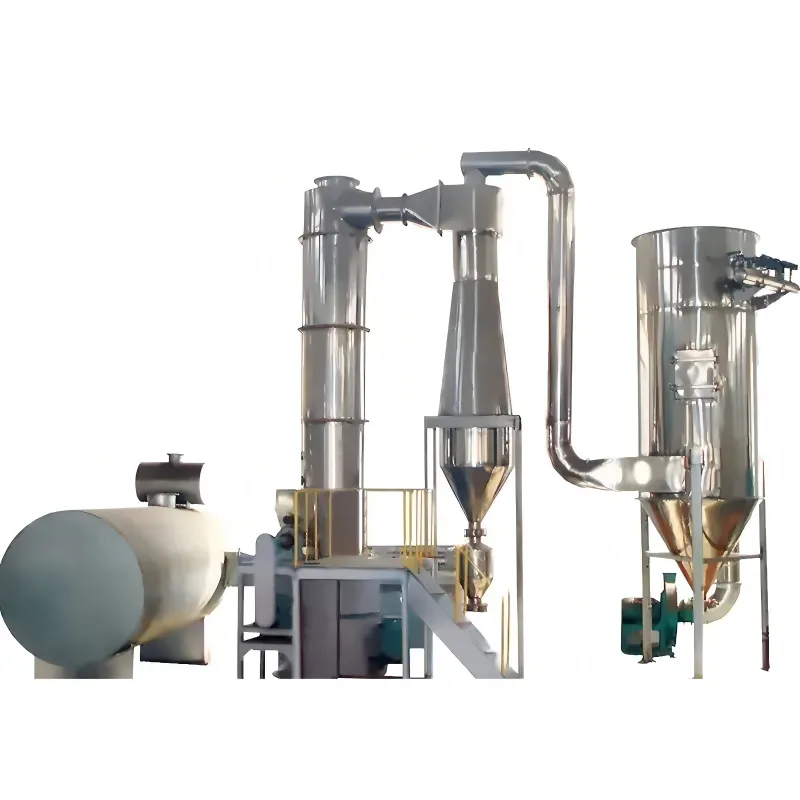
Spin Flash Dryer
XSG spin flash dryer for filter cakes, pastes and slurries. Dries, disintegrates and classifies in one chamber. Seven models evaporating 58–1,203 kg/h of water.
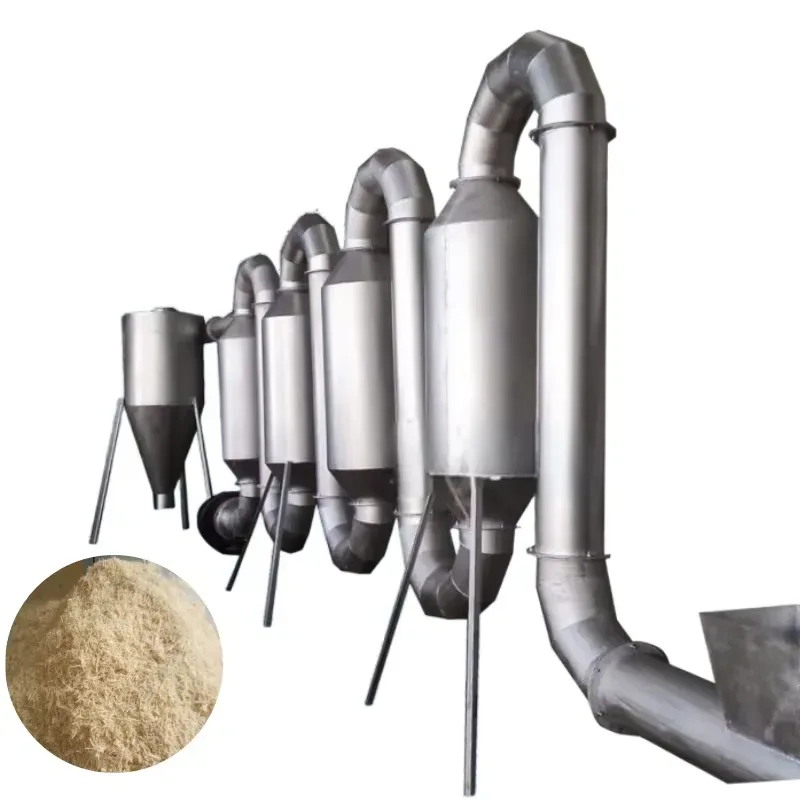
Pulse Flash Dryer
Pulse flash dryer using instantaneous airborne drying to remove free moisture from powders and granules at high throughput.