
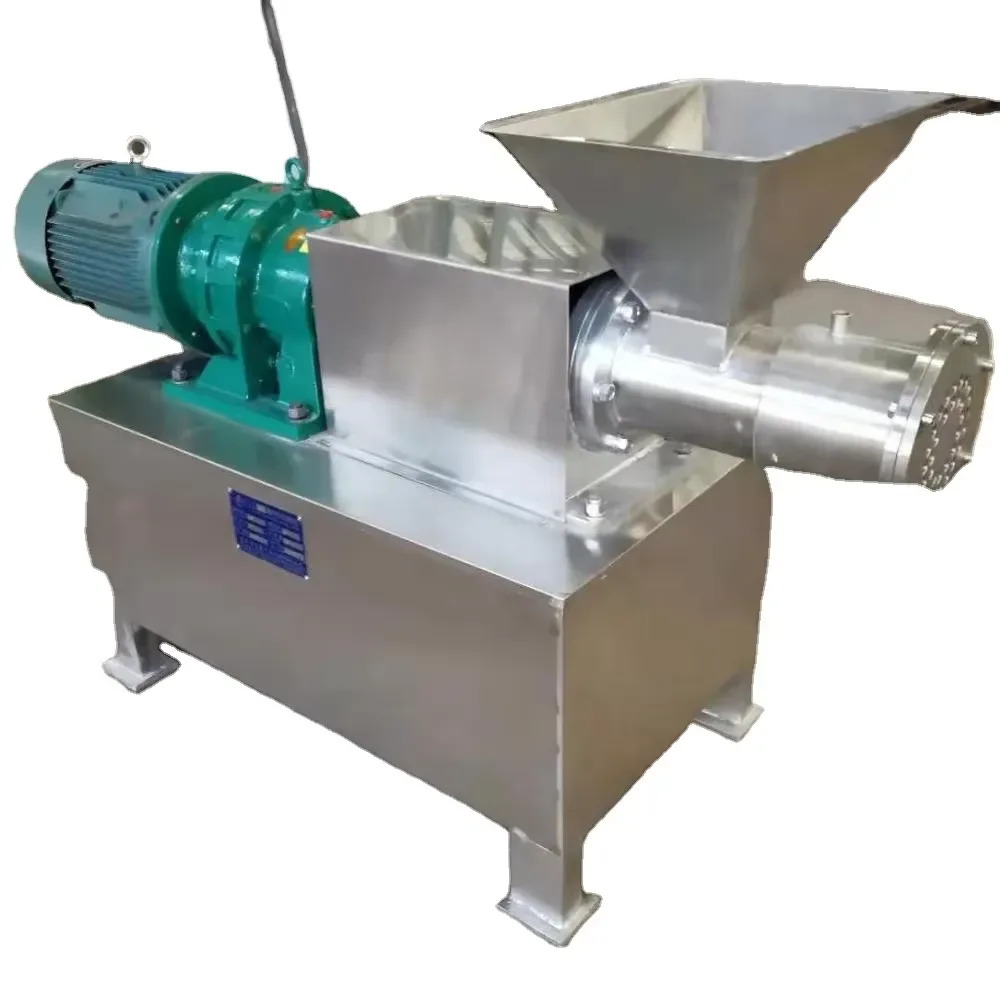
Roller Compactor — Dry Granulation Without Liquid or Heat
GFZL roller compactor for dry granulation of moisture- and heat-sensitive powders. No binder, no drying step. Five models, 80–2000 kg/h finished granules.
The GFZL roller compactor granulates without liquid binder and without a drying step. Dry powder is compacted between two counter-rotating rollers into a hard ribbon, which is then milled and screened into uniform granules.
That makes it the route for materials that cannot tolerate water or heat — and it removes the dryer from the line entirely.
Five models produce 80 to 2000 kg/h of finished granules in continuous operation.
How it works
- Feeding. A feed screw delivers powder into the gap between the rollers and de-aerates it on the way. Consistent feed is what makes the ribbon consistent.
- Compaction. Two counter-rotating rollers compress the powder into a dense ribbon or flake. Forming pressure ranges from 50 to 130 t by model.
- Milling and sizing. The ribbon is broken, milled and screened into granules. The screen aperture sets the finished size.
- Fines recycling. Undersize material returns to the feed rather than being discarded, so yield stays high.
There is no wetting and no drying. The powder that goes in is the powder that comes out — densified, sized and free-flowing.
When dry granulation is the right route
The decision usually comes from the formulation, not from a preference for the equipment:
- Moisture-sensitive actives. Compounds that hydrolyse cannot meet stability requirements if water is introduced, however briefly.
- Heat-sensitive actives. Where a drying step would degrade the product, removing the step removes the problem.
- Polymorph stability. Wetting and drying can drive a form change that dry processing avoids.
- Throughput. Roller compaction runs continuously rather than in batches, which suits high-volume production.
- Energy and time. No binder preparation, no drying, no wait for the batch to reach target moisture.
What to control: ribbon density
Roller compaction has one intermediate that governs everything downstream: the density of the ribbon.
Ribbon density determines granule size distribution, how many fines are generated, and how the granules behave when compressed into tablets. It is set by the balance between three settings:
| Setting | Effect |
|---|---|
| Roller pressure | Higher pressure gives a denser, harder ribbon |
| Roller speed | Faster rollers reduce dwell time under pressure |
| Feed screw speed | Controls how much material enters the nip, and therefore the gap |
These interact — raising feed rate at constant pressure changes the gap, which changes ribbon density even though the pressure setting has not moved. Establish the combination that gives the ribbon you need during development, and hold it.
An effect to plan for
Material compacted into a ribbon has already been through plastic deformation. Some of the bonding capacity that would otherwise be available when the granules are compressed into tablets has been used up.
Tablets made from roller-compacted granules can therefore come out softer at the same compression force than tablets from wet-granulated material. This is a known and well-documented effect, not a fault in the equipment.
It is managed by controlling ribbon density rather than compacting as hard as the machine allows — over-compaction is the usual cause. Assess it during formulation development, alongside the stability reasons that led to the dry route in the first place.
We would rather you know this before ordering than discover it during validation.
Features
- Dry process — no binder solution, no drying step
- Ideal for moisture- and heat-sensitive materials
- Continuous operation with high output
- Adjustable roller pressure and granule size
- Fines recycled back to the feed
- Closed, low-dust operation
Technical specifications
| Model | GFZL-1 | GFZL-2 | GFZL-3 | GFZL-4 | GFZL-5 |
|---|---|---|---|---|---|
| Roller diameter (mm) | φ240 | φ240 | φ300 | φ360 | φ480 |
| Roller effective width (mm) | 80 | 160 | 250 | 360 | 480 |
| Roller speed (rpm) | 8–20 | 8–20 | 8–20 | 8–20 | 8–20 |
| Max forming pressure (t) | 50 | 60 | 80 | 100 | 130 |
| Max flake thickness (mm) | 4 | 5 | 6 | 8 | 8 |
| Flake output (kg/h) | 250–500 | 500–900 | 700–2000 | 1000–1400 | 2000–7400 |
| Finished granule size (mm) | 0.2–5 | 0.2–5 | 0.2–8 | 0.2–8 | 0.2–8 |
| Finished output (kg/h) | 80–150 | 150–300 | 300–600 | 600–1000 | 1000–2000 |
| Main unit power (kW) | 7.5 | 11 | 15 | 22 | 30 |
| Total power (kW) | 13 | 21 | 30 | 46 | 60 |
| Dimensions L×W×H (mm) | 1500×2000×3800 | 1700×2000×4000 | 2000×2500×4200 | 2500×2500×5200 | 2800×2600×6000 |
| Weight (t) | 7 | 8 | 10 | 14 | 20 |
How these figures were calculated
- Flake output assumes a flake density of 1500 kg/m³ at a roller speed of 20 rpm. A material of different density, or run at lower roller speed, gives a different figure.
- Finished output is calculated on a 50 percent yield basis.
- Finished granule size is adjusted over a wide range by changing the screen aperture in the milling and sizing unit.
- Actual power drawn by the main unit is about 70 percent of the installed motor rating.
- Roller speed is adjusted by changing the pulley drive between motor and reducer.
We state the basis because the numbers are only meaningful with it. Compare these figures against your own material's density and compaction behaviour rather than reading the table as a guaranteed rating.
Applications
Moisture- and heat-sensitive powders in the pharmaceutical, food and chemical industries that require dry granulation — particularly where stability requirements rule out a wet route.
Dry or wet granulation?
| Dry (GFZL) | Wet, high shear | Wet, fluid bed | |
|---|---|---|---|
| Liquid binder | None | Yes | Yes |
| Drying step | None | Separate dryer | Same chamber |
| Suits moisture-sensitive | Yes | No | No |
| Suits heat-sensitive | Yes | Depends on dryer | Depends on inlet temperature |
| Operation | Continuous | Batch | Batch |
| Granule structure | Dense, angular | Dense, strong | Porous, compressible |
| Effect on later compression | Some bonding capacity used | Retained | Retained |
Choose dry where stability rules out water or heat, or where continuous high-volume operation matters.
Choose wet where the formulation tolerates it and tablet hardness at low compression force is the priority.
Where the target is spherical pellets rather than granules, neither route applies — that calls for extrusion followed by a spheronizer.
Selecting a model
| Input | Why it matters |
|---|---|
| Required finished output | Selects the model, with material density |
| Bulk and compacted density | The output figures assume 1500 kg/m³; yours may differ |
| Target granule size | Sets the sizing screen |
| Compaction behaviour of the formulation | Determines achievable ribbon density and yield |
| Downstream compression requirements | Informs how hard the ribbon should be made |
| GMP and containment requirements | Determines contact materials, finish, cleaning design and records |
| Available floor height | The larger models are up to 6 m tall |
Request a configuration
Send us the formulation, its density and compaction behaviour, the required output and the target granule size. We will size the GFZL against your material — and where the formulation tolerates a wet route and would compress better for it, we will tell you that instead.
Technical Specifications
| Model/Item | GFZL-1 | GFZL-2 | GFZL-3 | GFZL-4 | GFZL-5 |
|---|---|---|---|---|---|
| Roller Diameter (mm) | φ240 | φ240 | φ300 | φ360 | φ480 |
| Roller Effective Width (mm) | 80 | 160 | 250 | 360 | 480 |
| Roller Speed (rpm) | 8-20 | 8-20 | 8-20 | 8-20 | 8-20 |
| Max Forming Pressure (t) | 50 | 60 | 80 | 100 | 130 |
| Roller Max Thickness (mm) | 4 | 5 | 6 | 8 | 8 |
| Flake Output (kg/h) | 250-500 | 500-900 | 700-2000 | 1000-1400 | 2000-7400 |
| Finished Granularity (mm) | 0.2-5 | 0.2-5 | 0.2-8 | 0.2-8 | 0.2-8 |
| Finished Output (kg/h) | 80-150 | 150-300 | 300-600 | 600-1000 | 1000-2000 |
| Main Unit Power (kW) | 7.5 | 11 | 15 | 22 | 30 |
| Total Power (kW) | 13 | 21 | 30 | 46 | 60 |
| Overall Dimensions L×W×H (mm) | 1500×2000×3800 | 1700×2000×4000 | 2000×2500×4200 | 2500×2500×5200 | 2800×2600×6000 |
| Weight (t) | 7 | 8 | 10 | 14 | 20 |
Frequently Asked Questions
Related Products
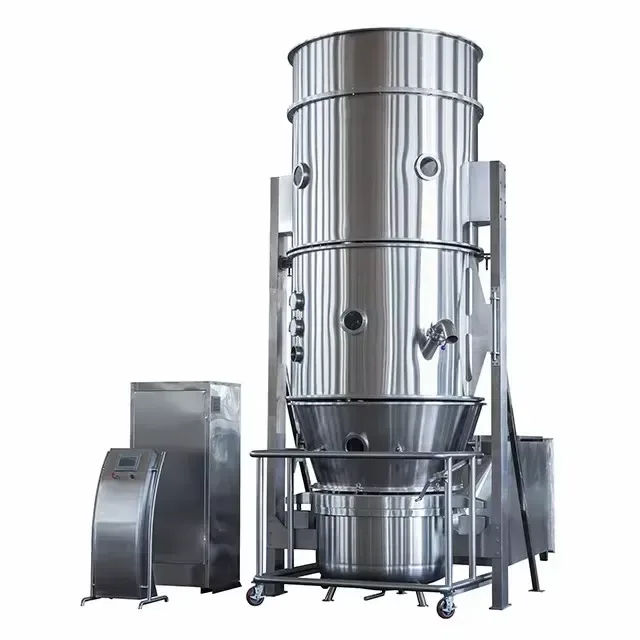
Fluid Bed Granulator — One-Step Granulation and Drying
FL fluid bed granulator mixes, granulates and dries in one closed chamber, giving porous, free-flowing granules. Nine models, 12–1500 L.
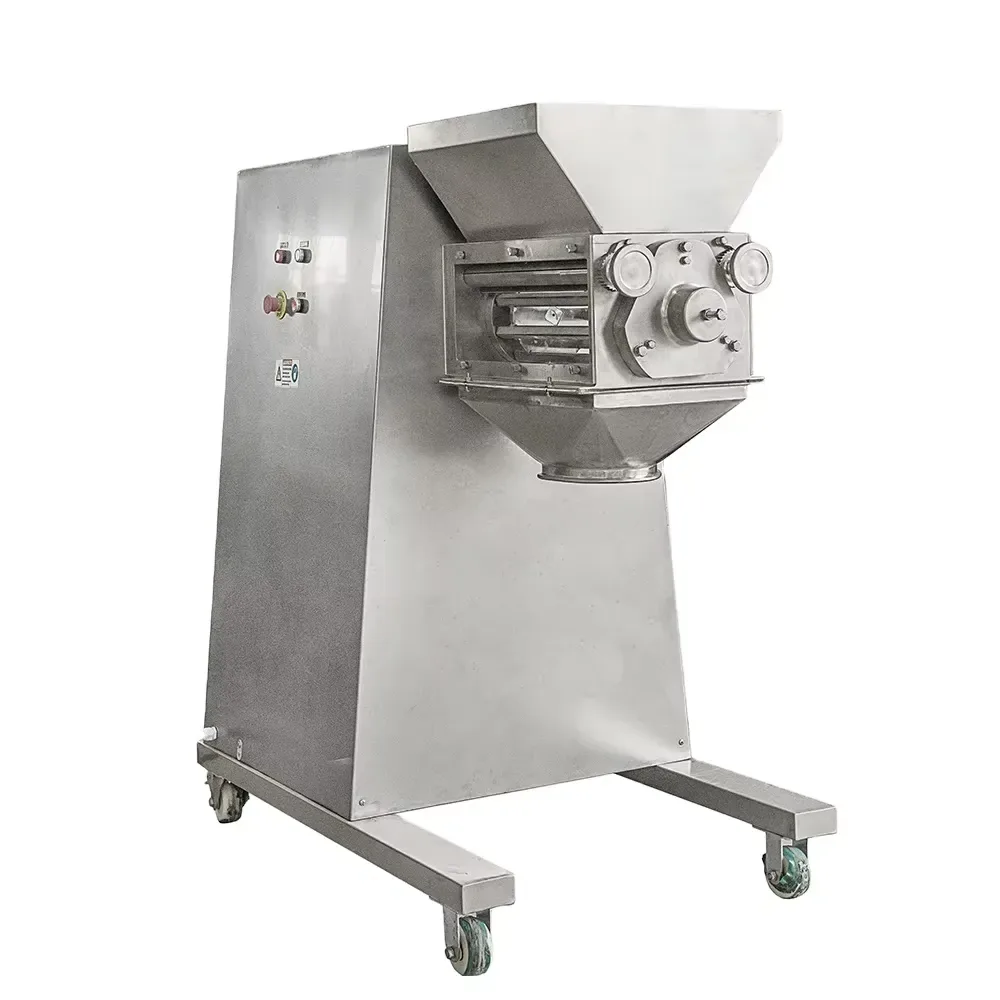
Oscillating Granulator
Oscillating granulator that forms wet powders into uniform granules by pressing them through a screen with an oscillating roller.
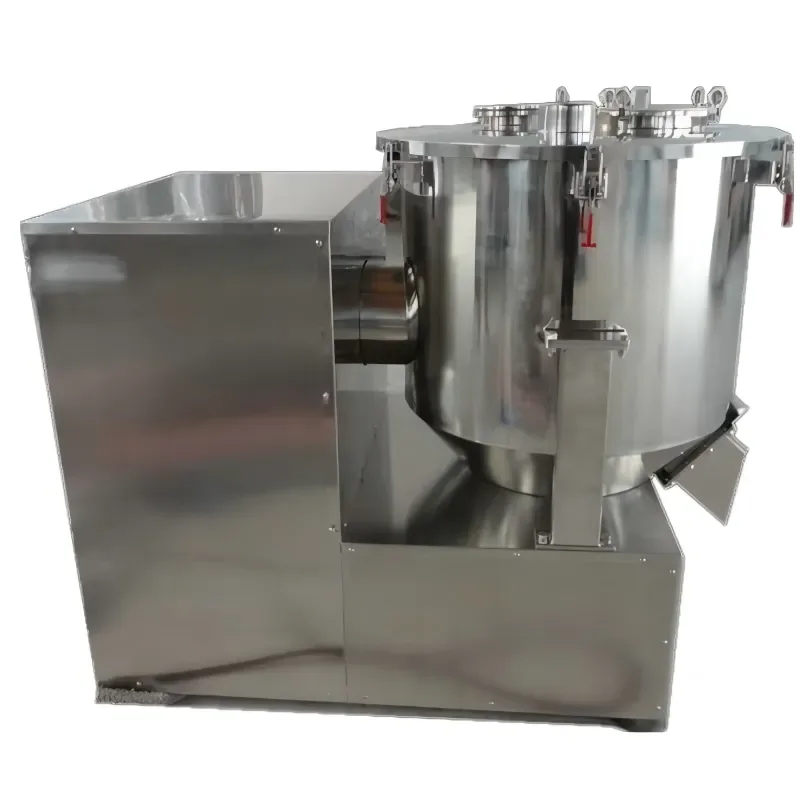
High-Shear Wet Granulator (RMG) for Pharma Granulation
GHL high-shear wet granulator — rapid mixer granulator with impeller and chopper producing dense, uniform granules in one closed vessel. Eight models, 10–600 L.
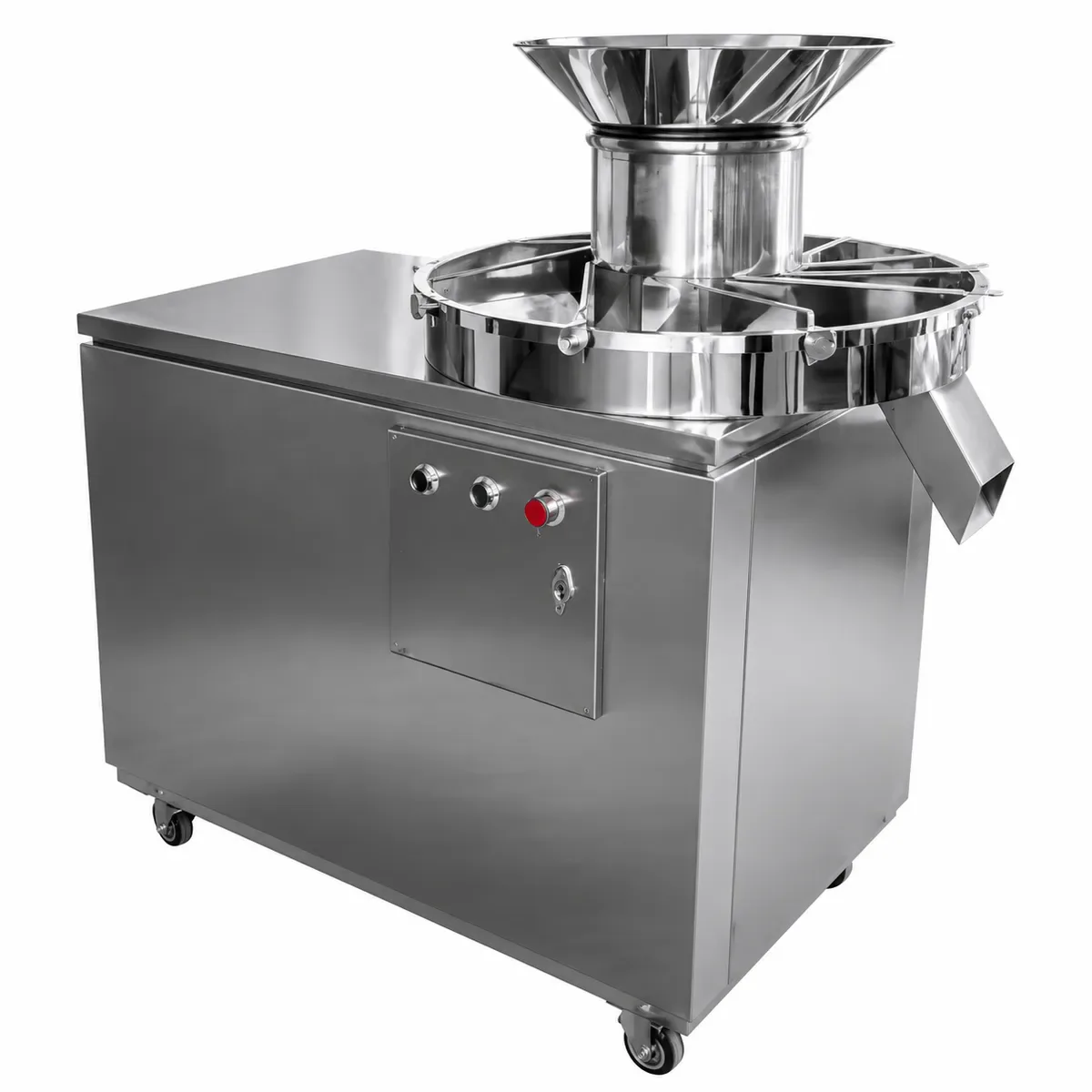
Rotary Granulator
Rotary granulator with a rotating cutter that presses mixed material through a screen into neat granules, ideal for highly viscous materials.
Product Categories
Start Optimizing Your Drying Process Today
Contact our experts for pricing, customization options, and technical support for Roller Compactor — Dry Granulation Without Liquid or Heat.