
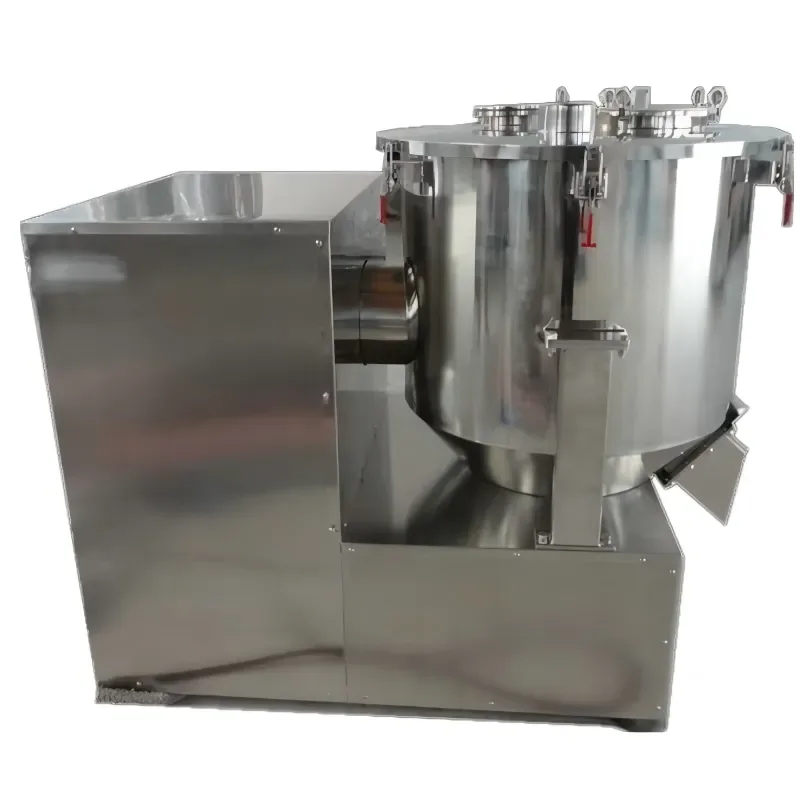
High-Shear Wet Granulator (RMG) for Pharma Granulation
GHL high-shear wet granulator — rapid mixer granulator with impeller and chopper producing dense, uniform granules in one closed vessel. Eight models, 10–600 L.
The GHL high-shear wet granulator mixes powder and binder and forms granules in a single closed vessel, using a bottom mixing impeller together with a side chopper. Dry mixing, wetting and granulation happen in one operation, producing dense, uniform, high-strength granules in a short cycle.
In pharmaceutical production this machine is usually called a rapid mixer granulator (RMG). Eight models cover 10 to 600 L, from development batches of 3 kg to production batches of 280 kg.
Impeller and chopper: two tools, two jobs
The distinction between the two is the whole basis of high-shear granulation.
The impeller sits at the bottom of the bowl and drives bulk movement. It blends the dry powder, distributes the binder as it is sprayed in, and — as wetting continues — densifies the mass. Liquid bridges form between particles, the impeller's shearing action packs them together, and granules build up and grow.
The chopper is a small, high-speed tool mounted in the side wall. It does not mix. It cuts through the wetted mass as it passes, breaking up lumps and oversize agglomerates before they can grow further.
Together they give control the impeller alone cannot: the impeller builds granules, the chopper sets the ceiling on how large they get. Adjusting the two speeds against each other is how granule size and density are tuned.
Why two-speed drives
Each stage of the cycle needs different energy input, which is why both tools run at two speeds:
| Stage | Impeller | Chopper |
|---|---|---|
| Dry mixing | Low — blend without densifying | Off or low |
| Binder addition | Low to high, by formulation | Low to high |
| Granulation / wet massing | High — build and densify | High — control size |
| Discharge | Low | Off |
Running dry mixing at granulation speed wastes energy and can start densifying the powder before the binder is in. Running granulation at mixing speed will not build the granule strength the product needs. Two-speed drives let one machine do both properly.
The end point
High-shear granulation is fast, and that is both its advantage and the thing to watch. The window between correctly granulated and over-granulated can be under a minute. Past it, the mass keeps densifying into a paste that no longer breaks down into usable granules.
End point is commonly tracked by impeller power draw or motor torque, which rise measurably as the wet mass builds, together with sampling. The value that marks a good end point is established during development for each formulation — it is a property of the product, not a machine setting that transfers from one batch of another material.
Plan development work around finding it. This is normally the single most important process parameter on the machine.
Features
- Combined mixing and granulation in one closed vessel
- Dense, uniform, high-strength granules
- Short processing cycle
- Impeller plus chopper for fine control of granule size
- Two-speed drives on both impeller and chopper
- Closed, GMP-compliant and easy to clean
- Stainless-steel contact parts
Technical specifications
| Model | Bowl volume (L) | Output (kg/batch) | Impeller speed (rpm) | Impeller power (kW) | Chopper speed (rpm) | Chopper power (kW) | Compressed air (m³/min) |
|---|---|---|---|---|---|---|---|
| GHL-10 | 10 | 3 | 300/600 | 1.5/2.2 | 1500/3000 | 0.85/1.1 | 0.6 |
| GHL-50 | 50 | 15 | 200/400 | 4/5.5 | 1500/3000 | 1.3/1.8 | 0.6 |
| GHL-150 | 150 | 50 | 180/270 | 6.5/8 | 1500/3000 | 2.4/3 | 0.9 |
| GHL-200 | 200 | 80 | 180/270 | 9/11 | 1500/3000 | 4.5/5.5 | 0.9 |
| GHL-250 | 250 | 100 | 180/270 | 9/11 | 1500/3000 | 4.5/5.5 | 0.9 |
| GHL-300 | 300 | 130 | 140/220 | 13/16 | 1500/3000 | 4.5/5.5 | 1.1 |
| GHL-400 | 400 | 200 | 106/155 | 18.5/22 | 1500/3000 | 6.5/8 | 1.5 |
| GHL-600 | 600 | 280 | 80/120 | 22/30 | 1500/3000 | 9/11 | 1.8 |
Paired figures are the two drive speeds and their corresponding motor ratings.
Note that impeller speed falls as bowl size rises — 600 rpm on the 10 L, 120 rpm on the 600 L. This is deliberate. What governs granulation is tip speed at the impeller blade, not shaft rpm, and a larger impeller reaches the same tip speed at lower rotation. It is also why scale-up cannot be done by holding rpm constant between sizes.
Installation dimensions are available for each model on request, together with the layout drawing they refer to.
Applications
Granules for tableting and capsules in the pharmaceutical, food and chemical industries — particularly where the formulation needs dense, strong granules produced in a short cycle.
High shear or fluid bed?
Both routes granulate with a liquid binder. They produce different granules.
| High-shear (GHL) | Fluid bed | |
|---|---|---|
| Granule structure | Dense, strong | Porous, lighter |
| Bulk density | Higher | Lower |
| Compressibility | Lower | Higher |
| Cycle time | Short | Longer |
| Drying | Separate step | In the same chamber |
| Process control | End point is critical and narrow | More gradual, easier to hold |
Choose high shear where the tablet needs robust granules, where high bulk density matters, where drug loading is high, or where cycle time drives throughput.
Choose fluid bed where compressibility matters more than density, where the material is shear-sensitive, or where combining granulation and drying in one machine simplifies the line.
Consider other routes where the formulation is moisture- or heat-sensitive, in which case a dry roller compaction granulator avoids liquid entirely; or where the target is spherical pellets rather than granules, which calls for extrusion followed by a spheronizer.
Selecting a model
| Input | Why it matters |
|---|---|
| Batch size range and bulk density | Selects bowl volume — density decides what a bowl actually holds |
| Formulation and binder system | Determines wetting behaviour, cycle time and end point |
| Target granule size and density | Sets impeller and chopper speeds |
| Downstream process | Compression, capsule filling or coating each imply different granules |
| Dryer capacity | Must match the granulator's batch rate, since drying is a separate step |
| GMP and documentation requirements | Determines contact materials, finish, cleaning design and records |
| Containment requirements | Potent compounds may require closed transfer and specific discharge arrangements |
A bowl is run part-filled so the mass can circulate freely, so the working batch is smaller than nominal volume. The output column above reflects that.
Request a configuration
Send us the formulation, bulk density, batch size range and what happens downstream. We will size the GHL against your process and advise how it should sit alongside your dryer — and where a dry route or a fluid bed suits the product better, we will say so.
Technical Specifications
| Model | 10 | 50 | 150 | 200 | 250 | 300 | 400 | 600 |
|---|---|---|---|---|---|---|---|---|
| Dimension A | 270 | 320 | 420 | 500 | 500 | 550 | 670 | 750 |
| Dimension B | 750 | 950 | 1000 | 1100 | 1160 | 1200 | 1300 | 1500 |
| Dimension C×D | 1000×650 | 1250×800 | 1350×800 | 1650×940 | 1650×940 | 1700×1000 | 1860×1100 | 2000×1230 |
| Dimension E | 745 | 970 | 1050 | 1450 | 1400 | 1400 | 1550 | 1750 |
| Dimension F | 1350 | 1650 | 1750 | 2050 | 2260 | 2310 | 2410 | 2610 |
| Name/Specification | 10 | 50 | 150 | 200 | 250 | 300 | 400 | 600 |
| Volume (L) | 10 | 50 | 150 | 200 | 250 | 300 | 400 | 600 |
| Output (kg/batch) | 3 | 15 | 50 | 80 | 100 | 130 | 200 | 280 |
| Mixing Speed (r.p.m) | 300/600 | 200/400 | 180/270 | 180/270 | 180/270 | 140/220 | 106/155 | 80/120 |
| Mixing Power (kW) | 1.5/2.2 | 4/5.5 | 6.5/8 | 9/11 | 9/11 | 13/16 | 18.5/22 | 22/30 |
| Chopper Speed (r.p.m) | 1500/3000 | 1500/3000 | 1500/3000 | 1500/3000 | 1500/3000 | 1500/3000 | 1500/3000 | 1500/3000 |
| Chopper Power (kW) | 0.85/1.1 | 1.3/1.8 | 2.4/3 | 4.5/5.5 | 4.5/5.5 | 4.5/5.5 | 6.5/8 | 9/11 |
| Compressed Air Consumption (m³/min) | 0.6 | 0.6 | 0.9 | 0.9 | 0.9 | 1.1 | 1.5 | 1.8 |
Frequently Asked Questions
Related Products
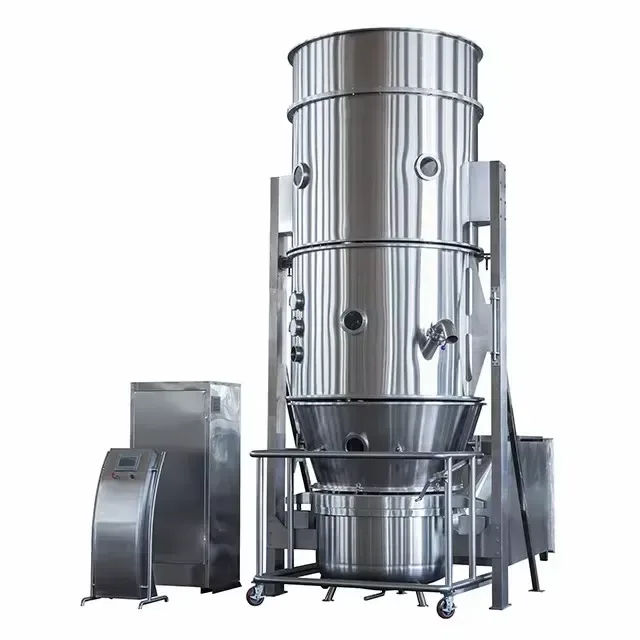
Fluid Bed Granulator — One-Step Granulation and Drying
FL fluid bed granulator mixes, granulates and dries in one closed chamber, giving porous, free-flowing granules. Nine models, 12–1500 L.
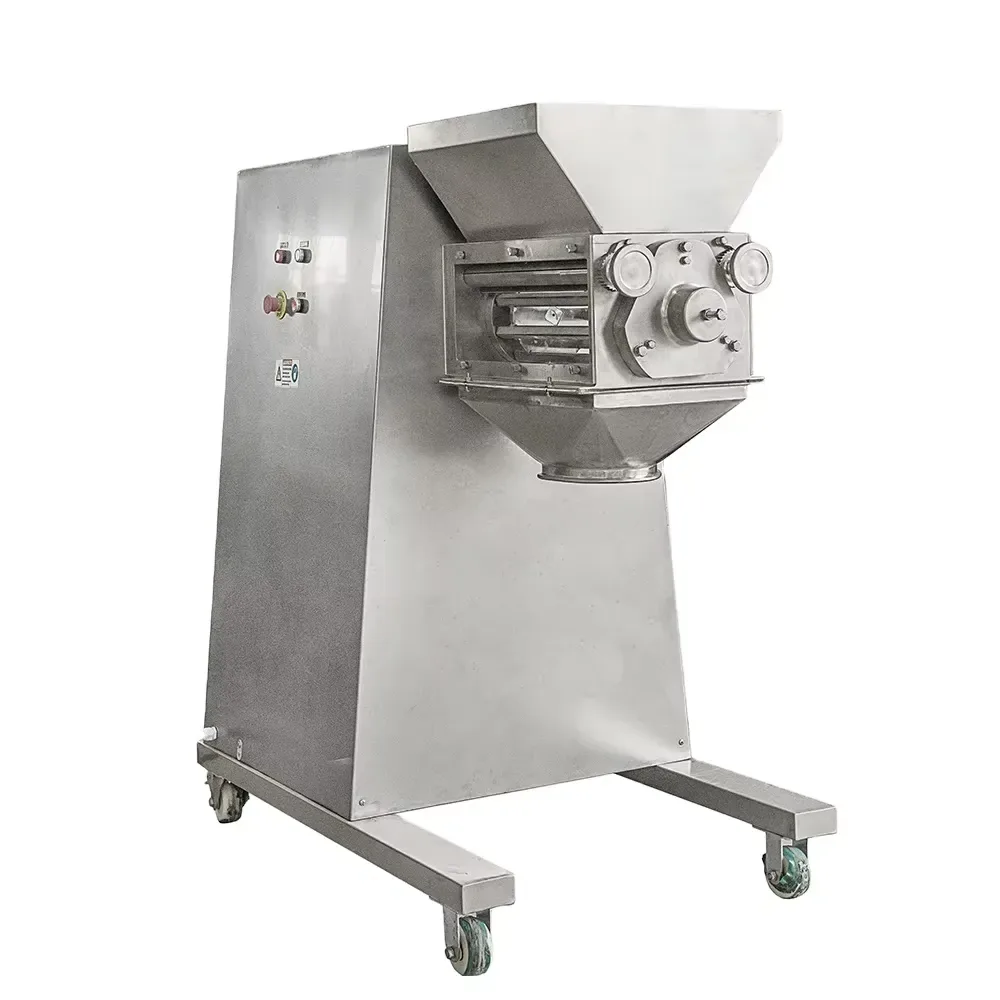
Oscillating Granulator
Oscillating granulator that forms wet powders into uniform granules by pressing them through a screen with an oscillating roller.
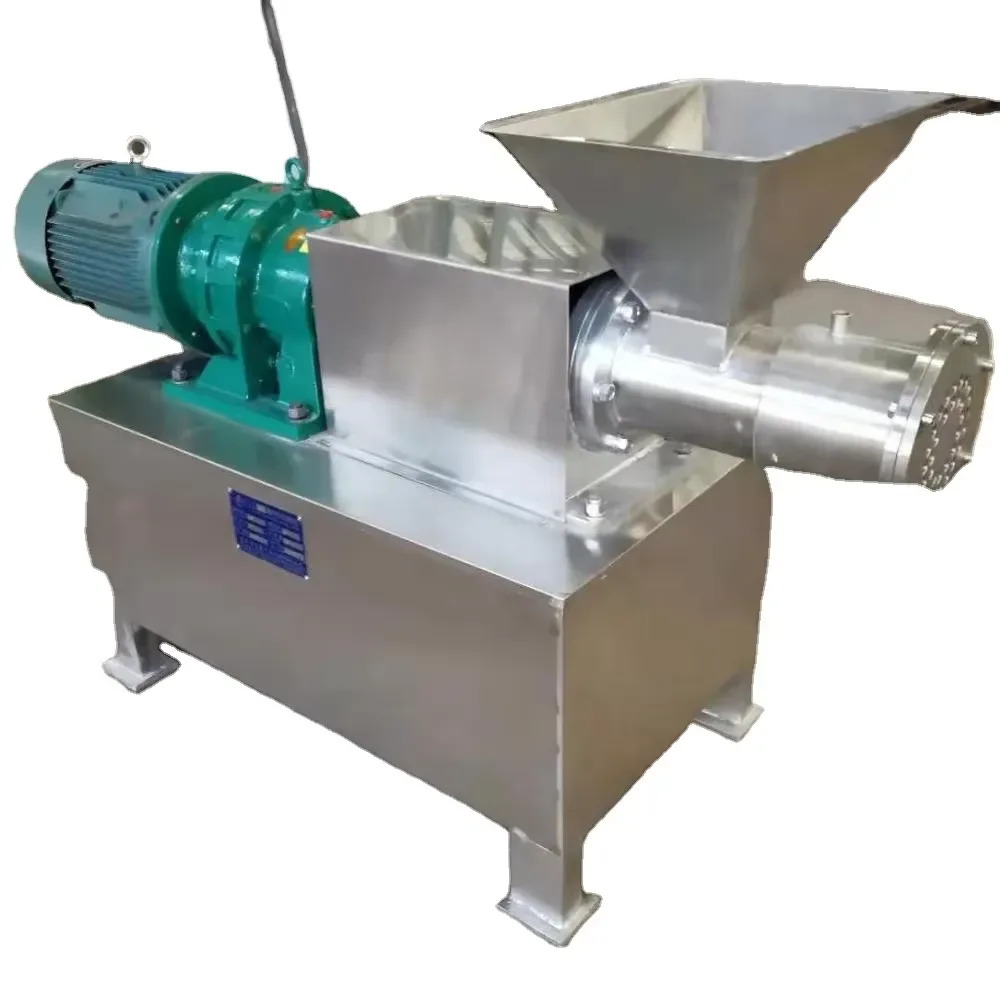
Roller Compactor — Dry Granulation Without Liquid or Heat
GFZL roller compactor for dry granulation of moisture- and heat-sensitive powders. No binder, no drying step. Five models, 80–2000 kg/h finished granules.
Rotary Granulator
Rotary granulator with a rotating cutter that presses mixed material through a screen into neat granules, ideal for highly viscous materials.
Product Categories
Start Optimizing Your Drying Process Today
Contact our experts for pricing, customization options, and technical support for High-Shear Wet Granulator (RMG) for Pharma Granulation.