
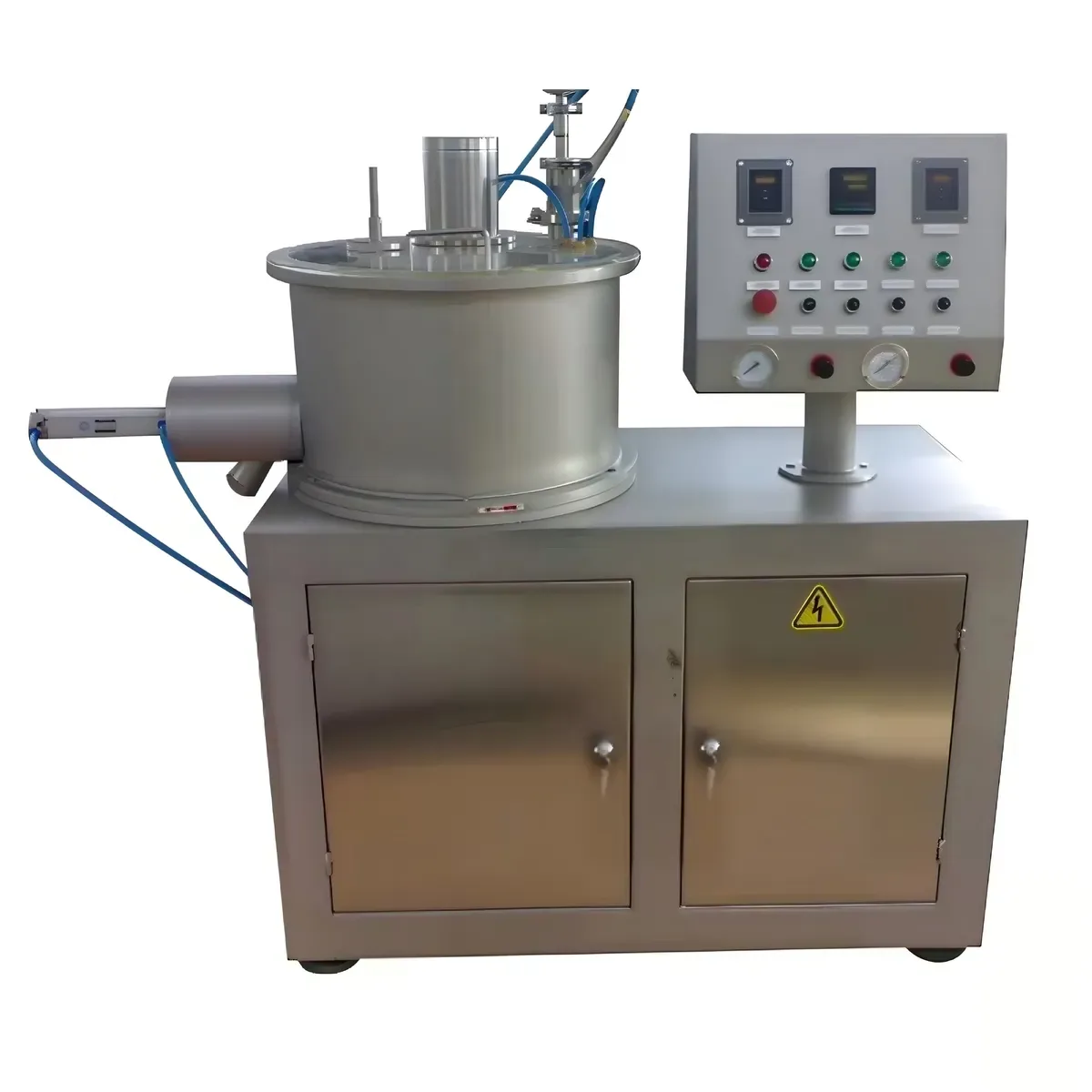
Spheronizer — Extrusion Spheronization for Pellets
QZL spheronizer rounds wet extrudate into spherical 0.5–2.0 mm pellets for capsule filling and coating. Six models, 2.5–300 kg/h.
The QZL spheronizer turns wet extrudate into highly spherical pellets of 0.5–2.0 mm. It is the rounding stage in the extrusion spheronization route, used where the product needs pellets rather than granules — capsule filling, controlled-release cores and traditional Chinese medicine pills.
Six models cover 2.5 to 300 kg/h, from formulation development through to production.
Where the spheronizer sits in the process
Spheronization is one stage of four, and each stage constrains the next:
| Stage | Equipment | What it determines |
|---|---|---|
| 1. Wet massing | High-shear wet granulator | Plasticity and moisture of the mass |
| 2. Extrusion | Extruder | Strand diameter — which sets final pellet size |
| 3. Spheronization | QZL spheronizer | Sphericity, density, surface quality |
| 4. Drying | Fluid bed dryer | Final moisture, without deforming the pellets |
The most common cause of poor pellets is not the spheronizer. A wet mass that is too dry produces extrudate that shatters into fines instead of rounding; too wet, and the pellets agglomerate into oversize lumps. The spheronizer can only round what the extruder gives it.
How it works
Wet granules from the extruder are fed onto a rotating centrifugal friction plate. With the blower running, three forces act on the material at once:
- air buoyancy from the annular gap around the plate,
- centrifugal force from plate rotation, and
- gravity.
Together these drive the material into a rope-like ring that rotates around the bowl. Each particle is repeatedly thrown outward, lifted, and folded back into the rope — first breaking the extruded strands into short cylinders, then rounding those cylinders into spheres as the edges are worn down.
The specially designed rotor structure is what produces high sphericity: the friction pattern on the plate governs how the rope circulates, and a stable rope is what gives an even, narrow size distribution.
Features
- Highly spherical pellets of 0.5–2.0 mm
- Rounds rod-shaped extrudate into round pellets in a single operation
- Specially designed rotor structure for high sphericity
- Simple operation with a short production cycle
- Stainless-steel contact parts
- Six plate sizes from 230 to 1300 mm
Applications
- Pharmaceutical — capsule pellets, controlled- and sustained-release cores, pellets for coating
- Traditional Chinese medicine — pills
- Food — spherical granules and instant products
- Cosmetics, dyes and pigments
- Ceramic industry
Technical specifications
| Model (plate diameter, mm) | Power (kW) | Capacity (kg/h) |
|---|---|---|
| QZL-230 | 0.75 | 2.5–4 |
| QZL-400 | 2.2 | 5–8 |
| QZL-550 | 3 | 10–50 |
| QZL-700 | 3.7 | 40–80 |
| QZL-1000 | 5.5 | 70–200 |
| QZL-1300 | 7.5 | 100–300 |
Capacity is stated as a range because residence time depends on the formulation. A mass that rounds quickly leaves the machine sooner and gives higher throughput; one that needs a longer cycle to reach the target sphericity gives less. Take the table as a selection guide and confirm the figure against your own material.
Why pellets rather than granules
Pellets are chosen when the downstream process needs a predictable surface:
- Coating. A sphere with a narrow size distribution presents consistent surface area per unit mass, so a film applied in a fluid bed coater gives a predictable release profile. An irregular granule coats unevenly, and releases unevenly.
- Capsule filling. Free-flowing spheres of even size fill capsules to a consistent weight.
- Multiparticulate dosing. A dose split across many pellets is less sensitive to the failure of any one of them than a single monolithic unit.
- Density and strength. Spheronized pellets are denser and more robust than porous granules, and survive handling and coating better.
If the product is destined for tablet compression rather than capsules or coating, porous granules usually serve better than dense pellets — a fluid bed granulator or high-shear granulator is then the right equipment, and spheronization is not required.
Selecting a spheronizer
| Input | Why it matters |
|---|---|
| Target pellet size | Set mainly by extruder screen aperture; confirms the process is feasible |
| Required throughput | Selects the model, with residence time |
| Formulation and binder system | Determines plasticity, rounding behaviour and cycle time |
| Batch size and campaign pattern | Affects whether batch or semi-continuous operation suits the line |
| Target sphericity and size distribution | Defines the acceptance criteria for trials |
| GMP and documentation requirements | Determines contact materials, finish, cleaning design and records |
| Upstream and downstream equipment | The extruder and dryer must match the spheronizer's rate |
The formulation is the variable that decides whether the route works at all. Not every material can be extruded and spheronized: the wet mass must be plastic enough to extrude cleanly and cohesive enough to round without disintegrating. That is established by trials, not by specification.
Trials
Plan development work on the actual formulation. Plate speed, residence time, load and moisture interact, and the settings that give good sphericity for one product will not transfer unchanged to another.
Record the conditions that produced acceptable pellets together with the size distribution, sphericity and yield used to judge them. Scale-up between plate sizes changes the rope circulation pattern, so each scale needs its own confirmation.
Request a configuration
Tell us the formulation, target pellet size, required throughput and what happens downstream — capsule filling, coating or direct use. We will propose a QZL model and advise how it should sit alongside your extruder and dryer. Where extrusion spheronization is the wrong route for the product, we will say so.
Technical Specifications
| Model | 230 | 400 | 550 | 700 | 1000 | 1300 |
|---|---|---|---|---|---|---|
| Power (kW) | 0.75 | 2.2 | 3 | 3.7 | 5.5 | 7.5 |
| Capacity (kg/h) | 2.5-4 | 5-8 | 10-50 | 40-80 | 70-200 | 100-300 |
Frequently Asked Questions
Related Products
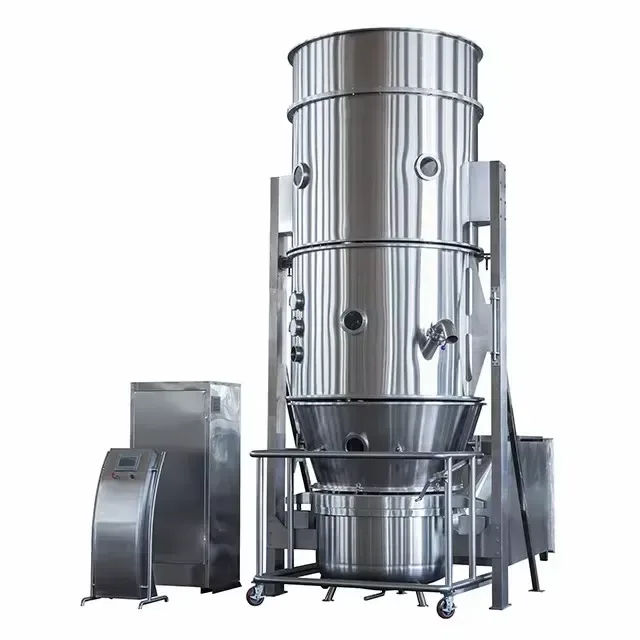
Fluid Bed Granulator — One-Step Granulation and Drying
FL fluid bed granulator mixes, granulates and dries in one closed chamber, giving porous, free-flowing granules. Nine models, 12–1500 L.
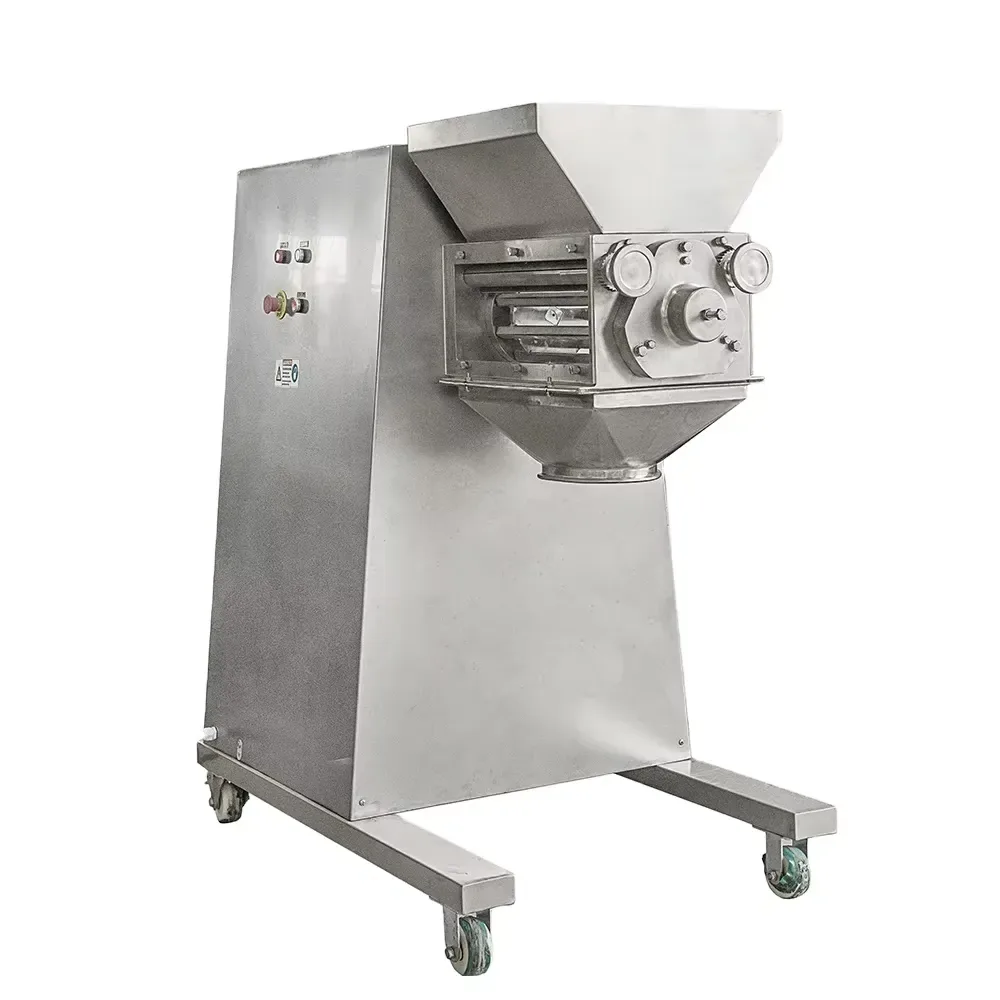
Oscillating Granulator
Oscillating granulator that forms wet powders into uniform granules by pressing them through a screen with an oscillating roller.
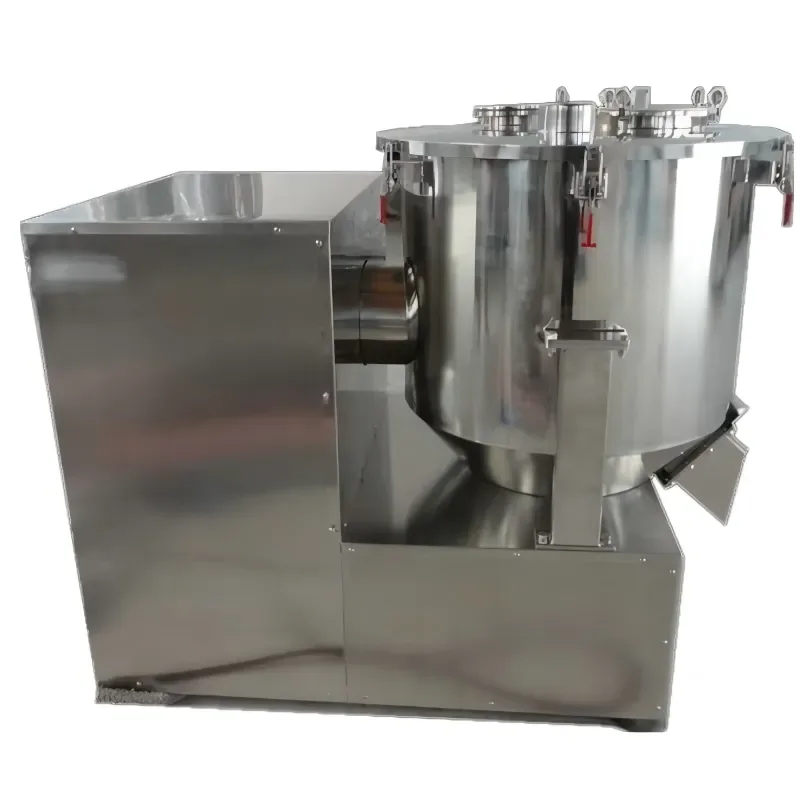
High-Shear Wet Granulator (RMG) for Pharma Granulation
GHL high-shear wet granulator — rapid mixer granulator with impeller and chopper producing dense, uniform granules in one closed vessel. Eight models, 10–600 L.
Roller Compactor — Dry Granulation Without Liquid or Heat
GFZL roller compactor for dry granulation of moisture- and heat-sensitive powders. No binder, no drying step. Five models, 80–2000 kg/h finished granules.
Product Categories
Start Optimizing Your Drying Process Today
Contact our experts for pricing, customization options, and technical support for Spheronizer — Extrusion Spheronization for Pellets.