
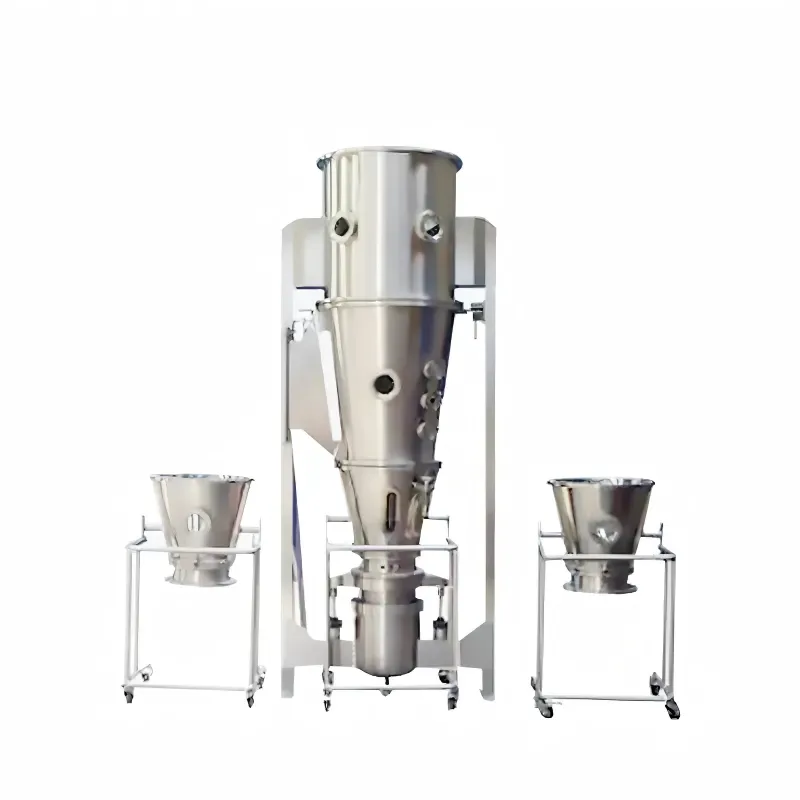
Wurster Fluid Bed Coater — Bottom Spray Film Coating
Bottom-spray (Wurster) fluid bed coater for uniform film coating of powders, granules and pellets. Batch 4–250 kg, container 15–650 L.
The LDP fluid bed coater applies uniform, continuous film coatings to powders, granules and pellets. It uses bottom spray, the configuration widely known as the Wurster arrangement, which gives the material a defined travel path past the nozzle and builds the film in repeated thin layers rather than a single heavy application.
That matters wherever a coating has a job to do beyond appearance: controlled and sustained release, enteric protection, moisture and oxidation barriers, and taste masking.
Why bottom spray produces an even film
In a Wurster arrangement the nozzle sits at the base of a partition column and sprays upward — the same direction the particles are already travelling.
- Air velocity is highest inside the partition, so particles accelerate up through it.
- Droplet and particle travel together over a short distance, so the droplet is still wet when it lands and spreads rather than drying in flight.
- Above the partition the air expands, particles slow and fall back down outside it, drying as they go.
- They re-enter at the base and pass the nozzle again.
Each particle crosses the spray zone many times, taking a thin layer each pass. The repetition is what produces film continuity — and it is why the short nozzle-to-particle path matters. A longer path lets droplets dry before they land, which is the failure mode that leaves a coating rough and incomplete.
For a fuller comparison of the configurations, see top spray vs bottom spray (Wurster) fluid bed processing.
Features
- Bottom-spray fluidisation with a defined material path, producing uniform, continuous films
- Taste-masking, moisture, oxidation, water, heat and colour-isolation coatings
- No loss of coating material, keeping production cost low
- Short droplet-to-particle path with no risk of the coating solution spray drying before it reaches the substrate
- Cylindrical accelerating or inverted-cone decelerating vessel, so microparticles, small and large granules and pellets can all be coated
- Excellent dispersion with no agglomeration
- Interchangeable inserts — the same base unit takes top spray, Wurster and tangential rotor configurations
Working principle
Filtered hot air fluidises the particles while the bottom spray applies the coating solution along a controlled path. Vessel geometry sets particle velocity: a cylindrical accelerating vessel or an inverted-cone decelerating vessel is selected according to the substrate, so that microparticles through to pellets can each be held in a stable circulation pattern.
Temperature, air volume, spray rate and atomising pressure are then balanced so that each pass deposits a thin layer which dries before the particle returns to the nozzle.
Technical Specifications
| Model | 5 | 15 | 30 | 60 | 120 | 200 | 300 |
|---|---|---|---|---|---|---|---|
| Feed Capacity (kg/batch) | 4-6 | 10-20 | 25-40 | 40-80 | 80-150 | 150-250 | — |
| Container Capacity (L) | 15 | 50 | 100 | 220 | 360 | 650 | — |
| Fan Power (kW) | 4 | 5.5 | 7.5 | 15 | 18.5 | 22 | — |
Applications
- Film and matrix controlled- and sustained-release coating of capsules and pellets
- Enteric coating where the release must be delayed past the stomach
- Taste masking of bitter actives
- Moisture and oxidation barriers on hygroscopic or unstable materials
- Coating of granules and powders in pharmaceutical production
Technical specifications
| Model | Feed capacity (kg/batch) | Container volume (L) | Fan power (kW) |
|---|---|---|---|
| LDP-5 | 4–6 | 15 | 4 |
| LDP-15 | 10–20 | 50 | 5.5 |
| LDP-30 | 25–40 | 100 | 7.5 |
| LDP-60 | 40–80 | 220 | 15 |
| LDP-120 | 80–150 | 360 | 18.5 |
| LDP-200 | 150–250 | 650 | 22 |
| LDP-300 | Designed to URS | Designed to URS | Designed to URS |
Feed capacity is stated as a range because the working batch depends on the bulk density and fluidisation behaviour of the substrate, not on weight alone. Confirm the model against your own material rather than reading across from the table.
LDP-300 is not a fixed model. At that scale the unit is engineered against a User Requirement Specification, so capacity, vessel geometry, air handling and utilities are set by the process rather than selected from a table.
Utilities
| Model | Compressed air (m³/min) | Steam consumption (kg/h) |
|---|---|---|
| LDP-5 | 0.4 | 9 kW electric |
| LDP-15 | 0.6 | 64 |
| LDP-30 | 0.9 | 85 |
| LDP-60 | 1.3 | 181 |
| LDP-120 | 1.8 | 250 |
| LDP-200 | 2.4 | 330 |
Compressed air is supplied at 0.6 MPa; steam at 0.4–0.6 MPa. The LDP-5 is electrically heated (9 kW) rather than steam heated, which is usually the practical choice at laboratory and small pilot scale where a steam supply may not be available.
Check these figures against the utilities you actually have on site before fixing a model. Air volume and steam capacity are as much a constraint on the selection as batch size — a unit that suits the product but exceeds the plant supply is the wrong unit.
Installation dimensions (overall height, footprint, container diameter and duct connections) are available for each model on request, together with the layout drawing they refer to.
Selecting a coater
Send us the following and we will size the unit against your process:
| Input | Why it matters |
|---|---|
| Substrate type and particle size | Determines vessel geometry and whether stable fluidisation is achievable |
| Bulk density | Sets the working volume the batch actually occupies |
| Batch size range | Selects the model, together with bulk density |
| Coating system | Viscosity and solids content govern spray rate and nozzle selection |
| Target weight gain or film thickness | Sets process time and the number of passes required |
| Release or protection specification | Defines the acceptance criteria the process must meet |
| GMP and documentation requirements | Determines contact materials, finish, cleaning design and records |
| Available utilities | Air volume, heating source and compressed air determine the practical configuration |
When a fluid bed coater is not the answer. If the goal is granule growth rather than a surface layer, a fluid bed granulator in top spray configuration is the appropriate route. If the formulation needs high-shear wetting and densification, a high-shear wet granulator fits better. If the target is dense, uniform spherical pellets, that normally begins with extrusion followed by a spheronizer — with the coater applied afterwards.
Trials and validation
Coating conditions are established on the actual formulation. Spray rate, inlet temperature, atomising pressure, product temperature and partition setting interact, and the balance that works for one product does not transfer unchanged to another.
Plan for development trials and record the conditions that produced acceptable product alongside the quality results used to judge it. Scale-up between machine sizes changes air volume, nozzle count and partition geometry, so each scale needs its own confirmation.
Request a configuration
Tell us the substrate, batch size range, coating system and release specification. We will propose an LDP configuration built around that process — and where a different route serves the product better, we will say so rather than fit your formulation to this machine.
Frequently Asked Questions
Related Products
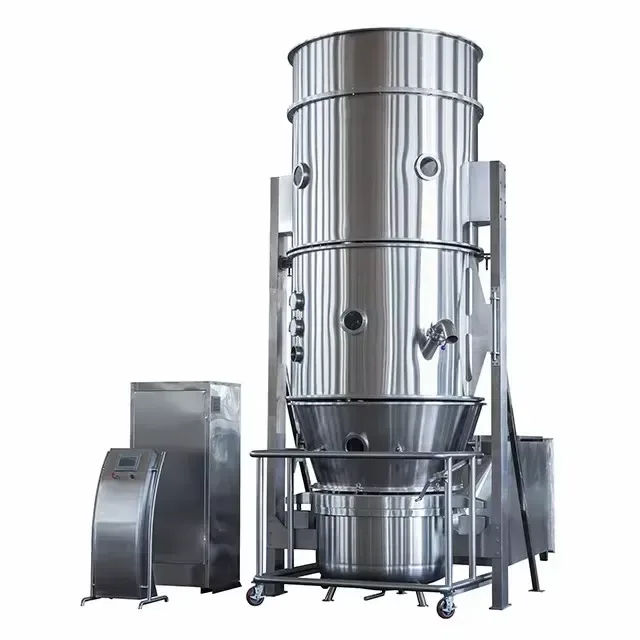
Fluid Bed Granulator — One-Step Granulation and Drying
FL fluid bed granulator mixes, granulates and dries in one closed chamber, giving porous, free-flowing granules. Nine models, 12–1500 L.
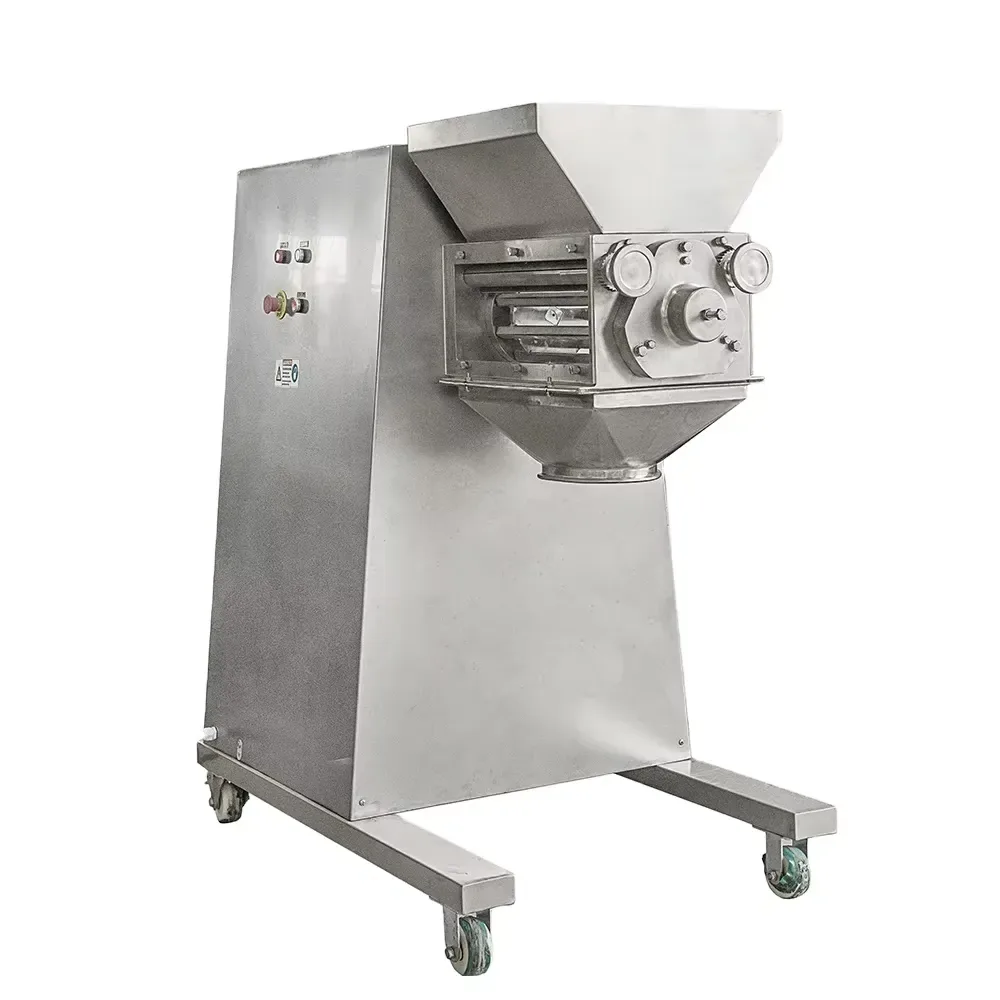
Oscillating Granulator
Oscillating granulator that forms wet powders into uniform granules by pressing them through a screen with an oscillating roller.
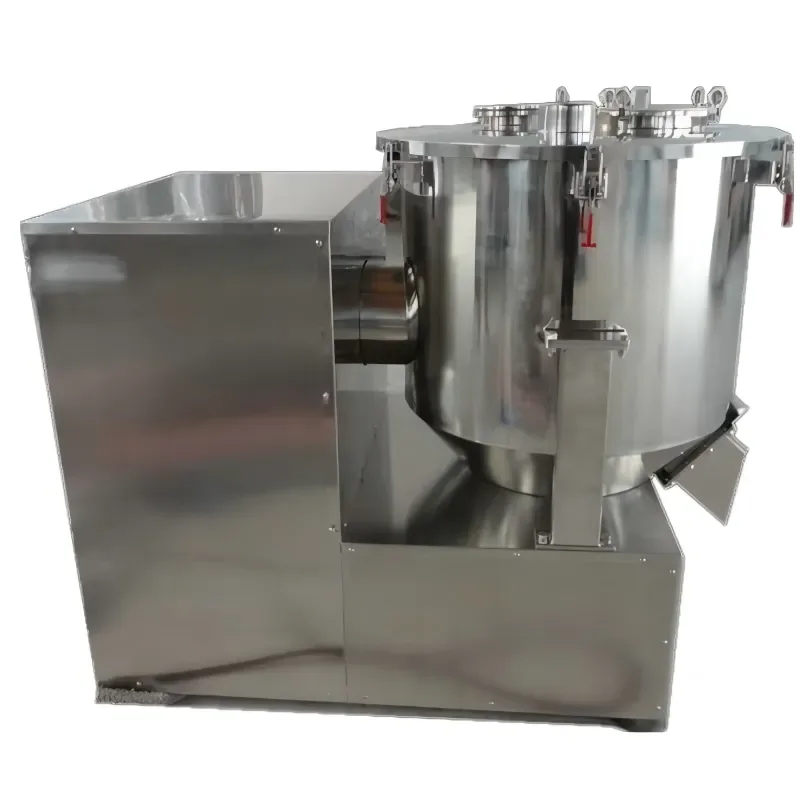
High-Shear Wet Granulator (RMG) for Pharma Granulation
GHL high-shear wet granulator — rapid mixer granulator with impeller and chopper producing dense, uniform granules in one closed vessel. Eight models, 10–600 L.
Roller Compactor — Dry Granulation Without Liquid or Heat
GFZL roller compactor for dry granulation of moisture- and heat-sensitive powders. No binder, no drying step. Five models, 80–2000 kg/h finished granules.
Product Categories
Start Optimizing Your Drying Process Today
Contact our experts for pricing, customization options, and technical support for Wurster Fluid Bed Coater — Bottom Spray Film Coating.