
Pharmaceutical Granulation Equipment: How to Choose
Granulation equipment is easy to compare on specification and hard to compare on fit. Two machines with similar throughput can produce granules that behave completely differently at the tablet press.
This guide covers what each route does, and — more usefully — which formulation constraints point to which one.
Why granulate
Most powder blends do not flow or compress well enough to be tableted directly. Fine powders bridge in the hopper, fill dies inconsistently, and segregate by particle size as they move — which puts content uniformity at risk before compression even starts.
Granulation converts those powders into larger, denser, free-flowing particles that fill a die reproducibly. It also binds the components together, so a granule carries the same proportion of active and excipient wherever it ends up.
Direct compression skips this entirely, and where the blend already flows and compresses acceptably it is the simplest route. Granulation is what you do when it does not.
The routes
Wet granulation — liquid binder
Powder is wetted with a binder solution, agglomerates form, and the granules are dried.
High-shear granulator (RMG). An impeller drives the wet mass around a closed bowl while a chopper limits granule size. Mechanical force packs particles into dense, strong granules in a cycle measured in minutes. Requires a separate dryer.
Fluid bed granulator. Powder is suspended in air while binder sprays down onto it. Particles agglomerate gently into porous, compressible granules, and dry in the same chamber. One machine covers mixing, granulation and drying.
The two are compared in detail in high-shear vs fluid bed granulation.
Dry granulation — pressure only
Roller compactor. Powder is compressed between counter-rotating rollers into a ribbon, which is milled into granules. No liquid, no heat, continuous operation. This is the route when stability rules out wetting — see roller compaction for moisture- and heat-sensitive formulations.
Screen granulation — force through a mesh
Oscillating granulator (YK). An oscillating roller presses material through a screen. Used to granulate wet powders and to break up dried cakes into uniform granules. Simple, gentle, and common as a sizing step.
Rotary granulator (ZLB). A rotating cutter presses mixed material through a screen. Suited to highly viscous materials that would foul other equipment.
Rapid granule sizer (KZL). A bladed rotor over a screen breaks and regularises wet or dry lumps at high speed. Used after drying to narrow the size distribution rather than to granulate from powder.
These are not alternatives to wet or dry granulation so much as companions to them. Most lines include one.
Pelletising — spheres rather than granules
Spheronizer. Wet extrudate is rounded into dense spheres of 0.5–2.0 mm on a rotating friction plate. Used where the product must be coated to a release specification, or filled into capsules by volume.
Spray granulation — from liquid feed
Spray-drying granulator (PGL-B). A solution, suspension or slurry is atomised into a hot fluidised bed, drying and agglomerating in one closed unit. This starts from a liquid rather than a powder, which makes it a different proposition from the routes above.
Coating — after granulation
Fluid bed coater. Bottom spray (Wurster) film coating for controlled release, enteric protection, moisture barriers and taste masking. Applied to granules or pellets once they exist.
The three questions that decide it
In practice most selections come down to these, in order:
1. Can the formulation tolerate water and heat?
If the active hydrolyses, degrades during drying, or changes polymorphic form on wetting — dry granulation is the only route. Stability requirements override every other consideration, and no advantage of the wet routes compensates for a product that fails on stability.
If it can tolerate wetting, continue.
2. Does the active compress well?
Poor compressibility favours fluid bed granulation. Its porous granules deform and interlock under compaction, so tablets reach target hardness at lower compression force. That headroom matters when the active fights you.
Good compressibility opens both wet routes.
3. How high is the drug loading?
High loading favours high shear. Dense granules put more mass into a fixed die volume, and there is less excipient available to fix flow problems. Dense granules also segregate less.
Low loading gives more freedom, and other factors — cycle time, machine count, containment — carry more weight.
Comparison at a glance
| High shear | Fluid bed | Roller compaction | |
|---|---|---|---|
| Binder | Liquid | Liquid | None |
| Heat | In separate dryer | In same chamber | None |
| Granule structure | Dense, strong | Porous, compressible | Dense, angular |
| Operation | Batch | Batch | Continuous |
| Machines needed | Granulator + dryer | One | One |
| Cycle | Minutes + drying | Tens of minutes total | Continuous |
| Process window | Narrow end point | Forgiving | Ribbon density controls all |
| Suits moisture-sensitive | No | No | Yes |
| Suits shear-sensitive | No | Yes | No |
What a complete line looks like
A tablet granulation line is rarely one machine. A typical wet granulation line runs:
- Mixing — blend the powders
- Granulation — high shear or fluid bed
- Drying — separate, or in the same chamber
- Sizing — oscillating granulator or rapid granule sizer to break lumps and narrow the distribution
- Blending — add extragranular excipients and lubricant
- Compression or capsule filling
A dry granulation line is shorter — compaction, milling and sizing happen inside the roller compactor, and there is no drying step.
A pelletising line adds extrusion before the spheronizer, and usually coating after it.
The granulator is one decision inside a line, not the whole line. Sizing capacity, dryer capacity and blend times all have to match its output, or the bottleneck simply moves.
What to send us
To recommend a route rather than a machine, we need to know:
| Input | Why |
|---|---|
| Formulation and drug loading | Determines which routes are viable |
| Stability constraints | Rules routes in or out before anything else |
| Compression behaviour of the active | Points toward porous or dense granules |
| Target granule or pellet size | Sets the equipment and screens |
| Batch size range and bulk density | Selects model sizes |
| Downstream process | Compression, capsule filling or coating |
| Existing equipment | The new machine has to fit the line that exists |
| GMP and containment requirements | Determines materials, finish, cleaning design and records |
Talk to Zhengyuan
We manufacture the full range — high-shear and fluid bed granulators, roller compactors, screen granulators, sizers, spheronizers and coaters. That means we have no reason to push you toward one route, and we will tell you when the answer is a machine we did not quote, or when direct compression makes granulation unnecessary altogether.
Send the formulation, the constraints and the batch size range, and we will start from the process.
Frequently Asked Questions
Related Products
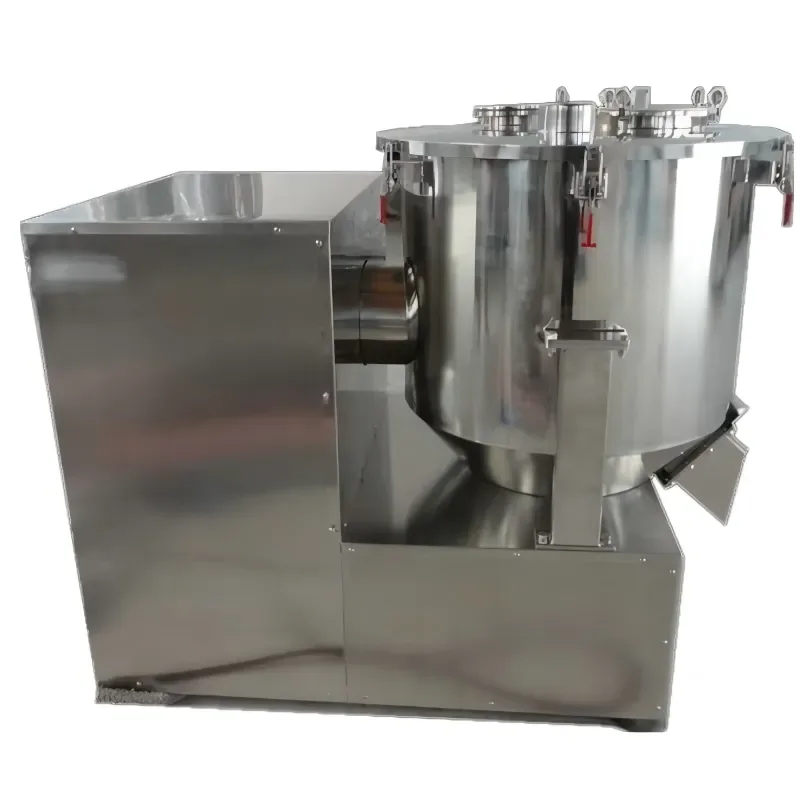
High-Shear Wet Granulator (RMG) for Pharma Granulation
GHL high-shear wet granulator — rapid mixer granulator with impeller and chopper producing dense, uniform granules in one closed vessel. Eight models, 10–600 L.
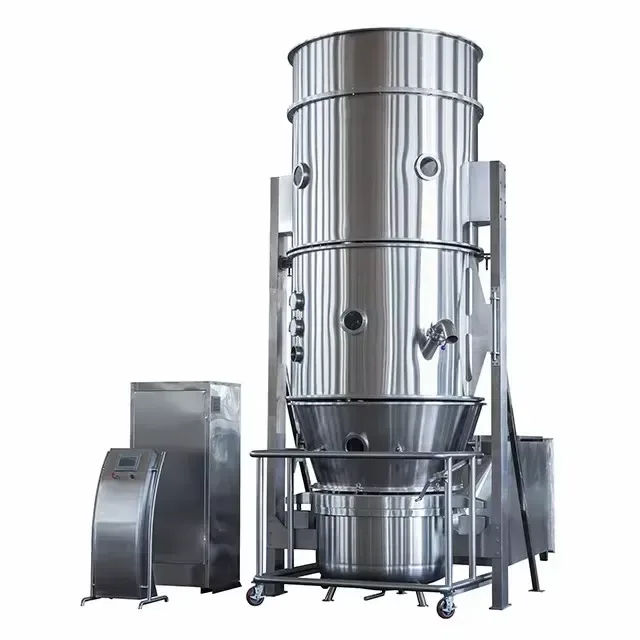
Fluid Bed Granulator — One-Step Granulation and Drying
FL fluid bed granulator mixes, granulates and dries in one closed chamber, giving porous, free-flowing granules. Nine models, 12–1500 L.
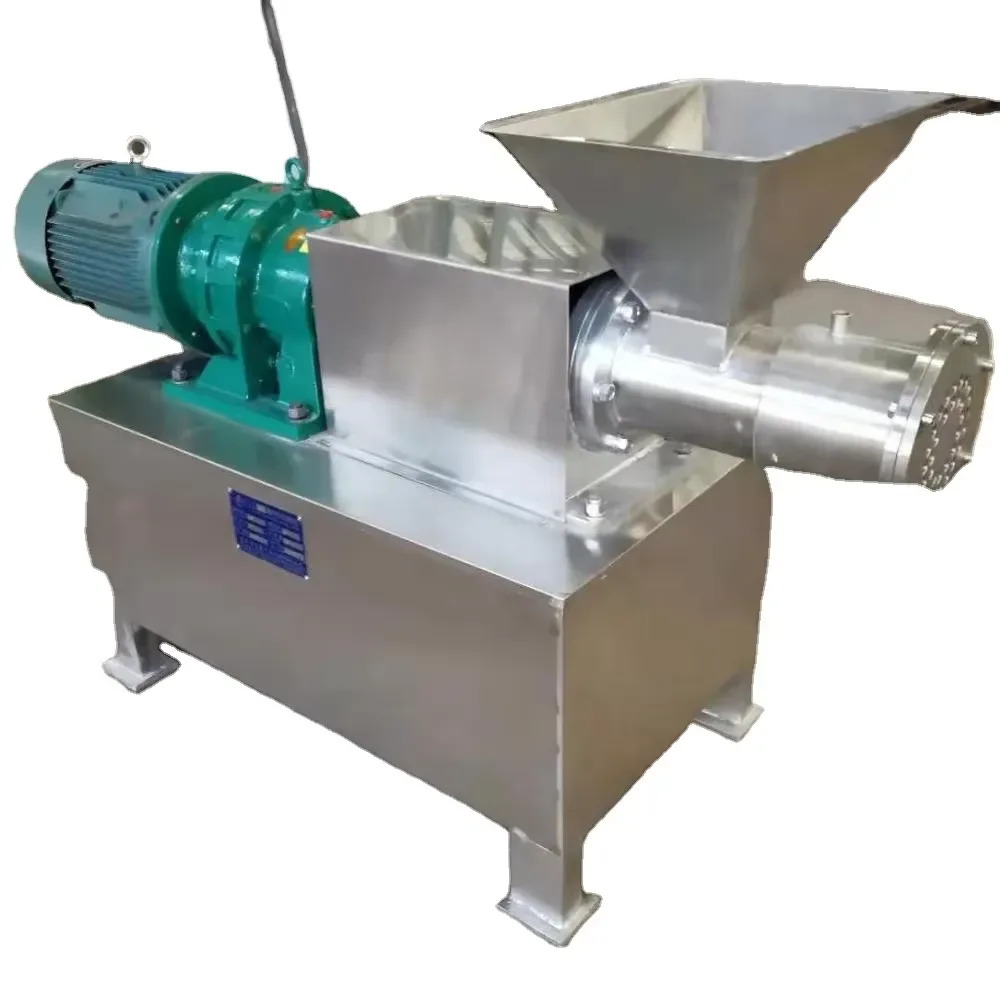
Roller Compactor — Dry Granulation Without Liquid or Heat
GFZL roller compactor for dry granulation of moisture- and heat-sensitive powders. No binder, no drying step. Five models, 80–2000 kg/h finished granules.
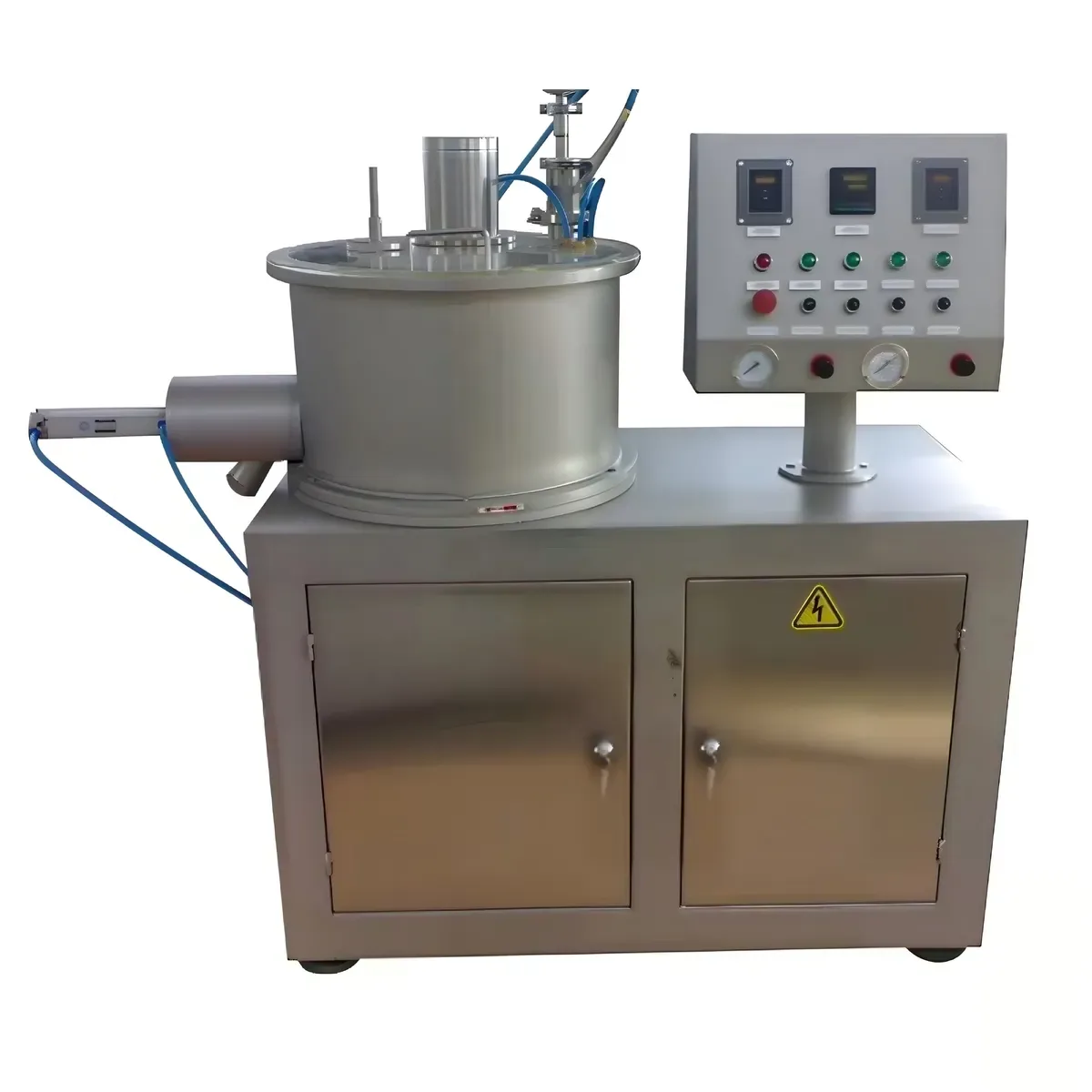
Spheronizer — Extrusion Spheronization for Pellets
QZL spheronizer rounds wet extrudate into spherical 0.5–2.0 mm pellets for capsule filling and coating. Six models, 2.5–300 kg/h.